
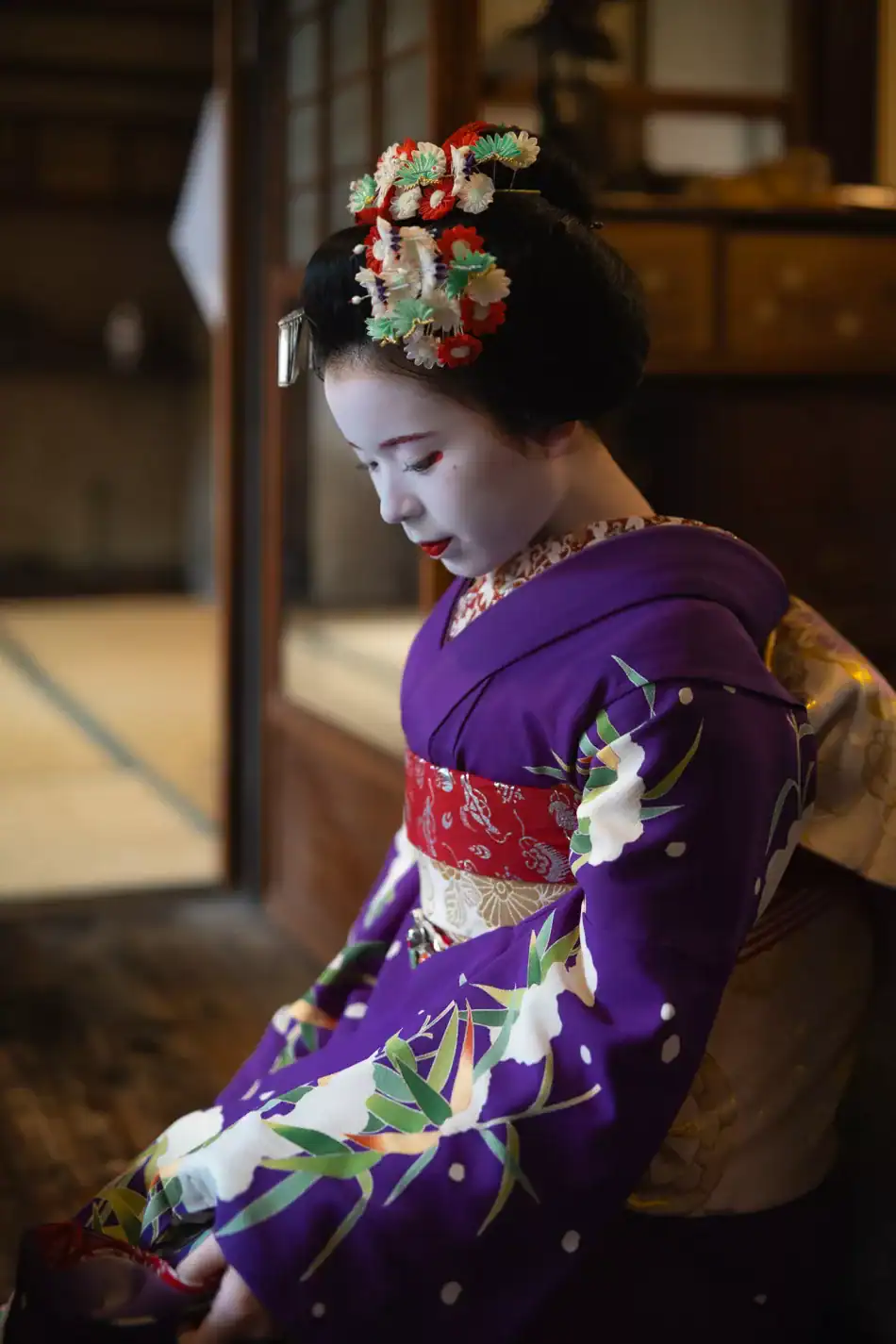
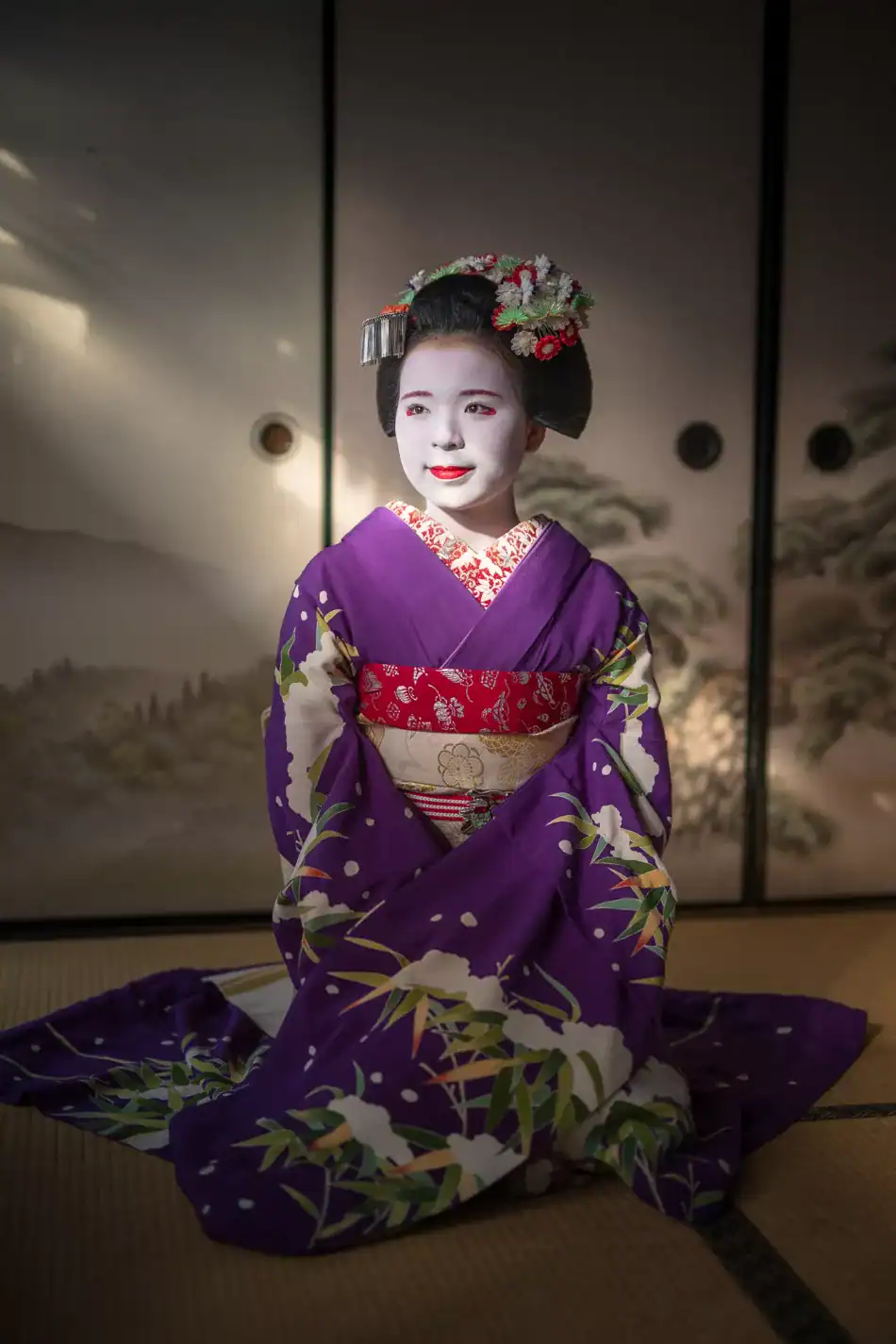
Standing at the window of the machiya, she turned her face ever so slightly, letting the diffused sunlight gather in her eyes. When she moved, she flowed like water, as if her body was formless beneath the layers of her purple furisode. The train of her kimono spread at her feet like a fan; this too was not a mere coincidence, but a seemingly effortless attention to her appearance and posture. This was my first personal interaction with a Kyoto geisha, and without saying a word, she had already taught me volumes.
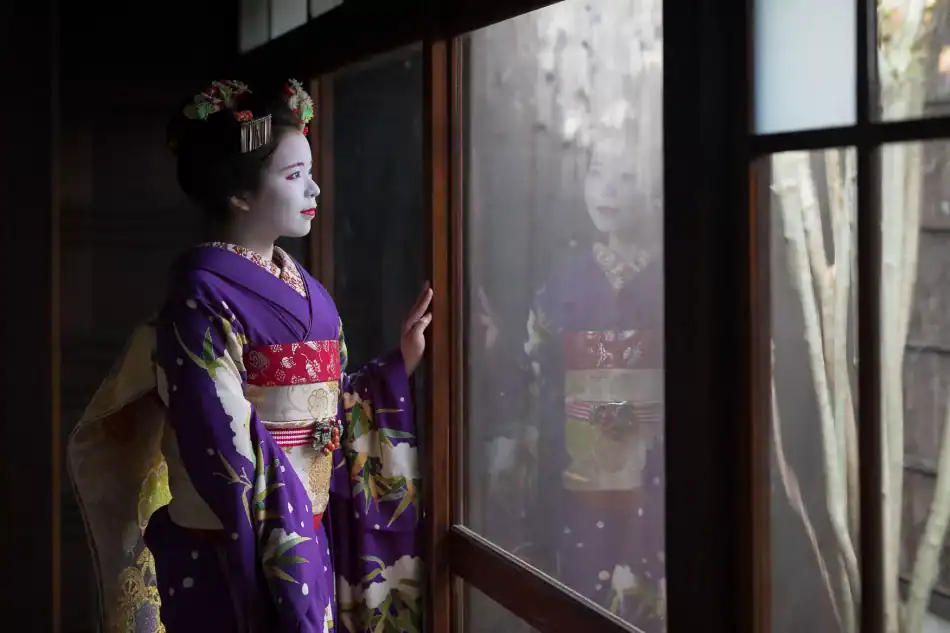
Almost every visitor to Japan dreams of meeting a geisha, or, like in my case, the youthful apprentices known as maiko. The fascination with them has become so strong that Kyoto had to enact laws to protect them from paparazzi-like tourists chasing them or blocking their paths to get photos, and to close off the private streets where they live in okiya houses. Most tourists now settle for large-scale performances or meet-and-greets to get an up-close photo of a geisha or exchange a brief greeting.
So it was a rare opportunity indeed to book a photoshoot with a maiko through Fernwayer, a platform offering premium experiences for tourists in many countries around the world, including Japan. With just one other friend shooting with me, and a host photographer to help set up shots and communicate with the maiko in Japanese, I didn’t have to rely on a long telephoto lens and a bit of luck to capture a perfect image of a Kyoto geisha.
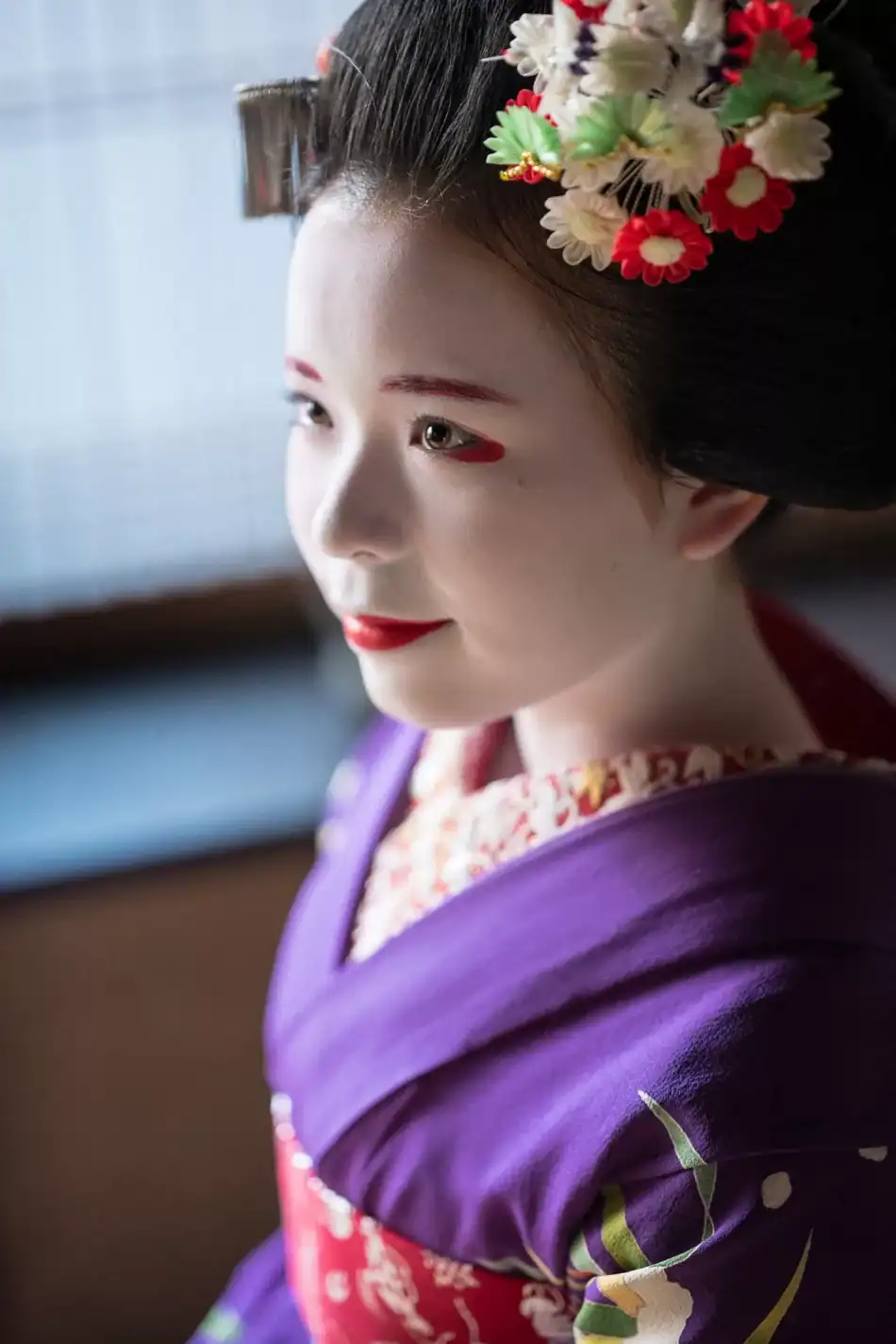
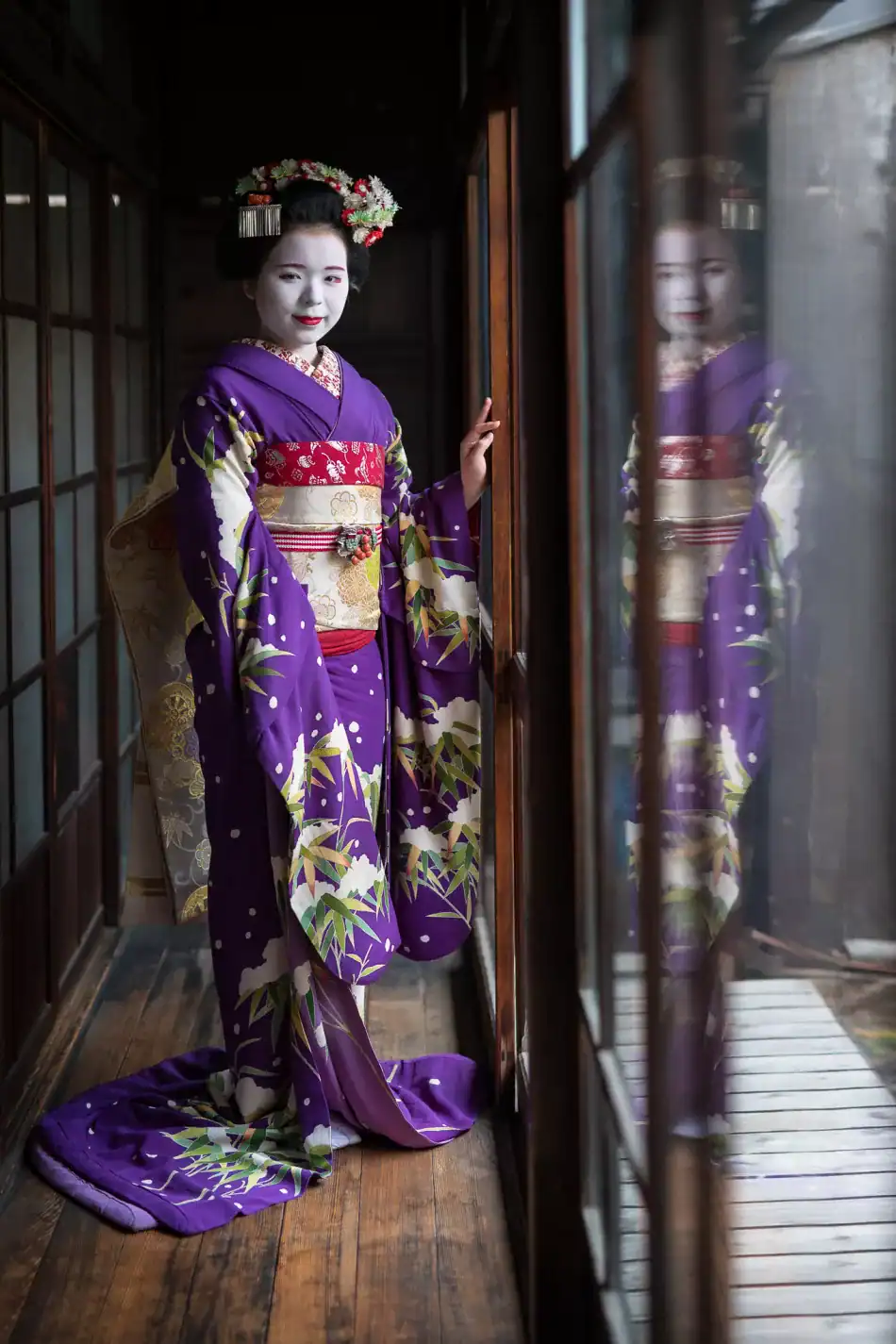
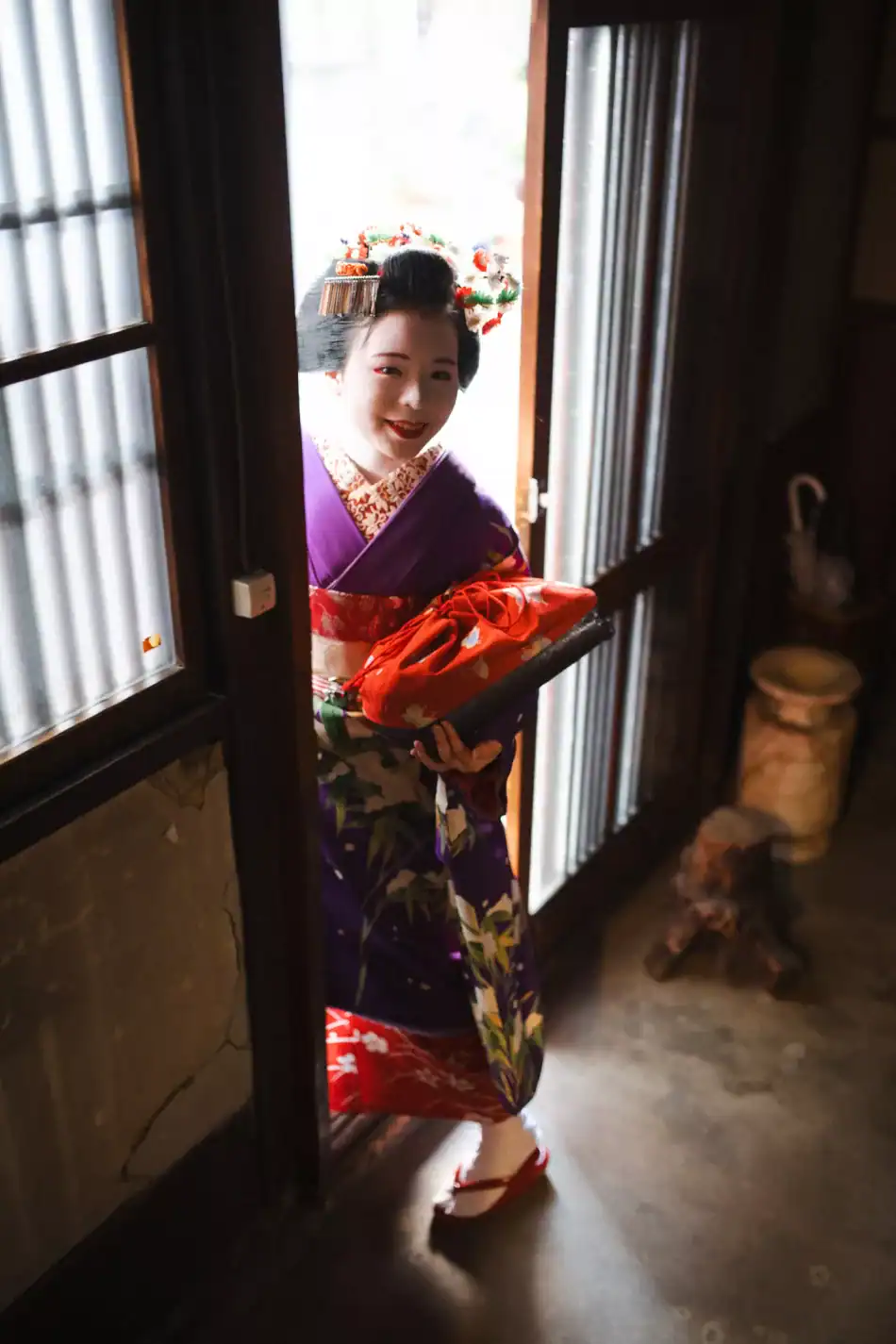
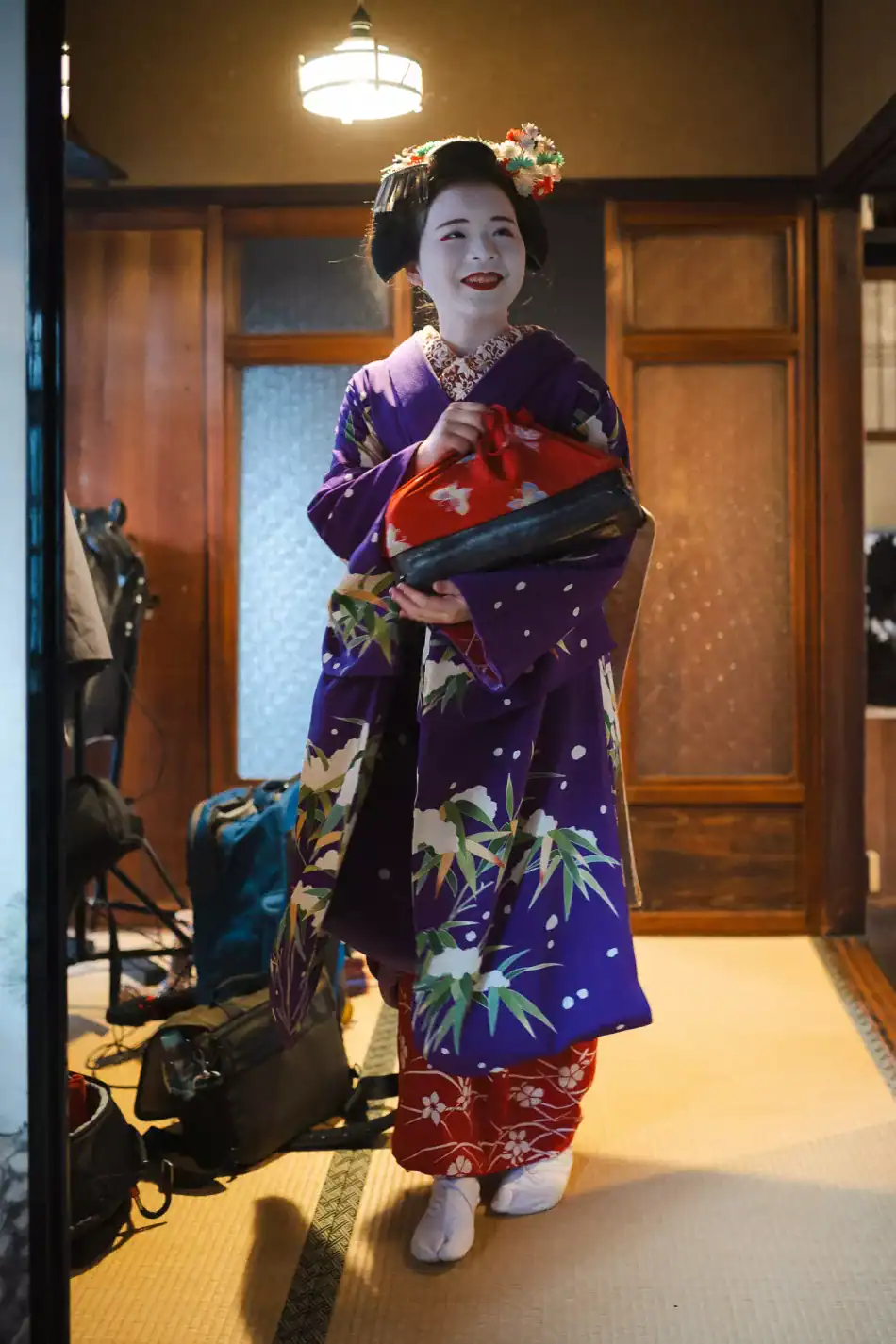
The photoshoot was held at an old merchant house, a venue commonly used for traditional photoshoots. Complete with antiques that could be used as props and architectural features that bordered on the cliche, the stage was set for an afternoon of portrait shooting that I would not soon forget. We spent the first 45 minutes or so discussing the types of shots we wanted, scouting the venue’s various rooms, and setting up lighting equipment. Soon, a cheerful voice called to us from outside the door before it slid open, and the maiko stepped inside.
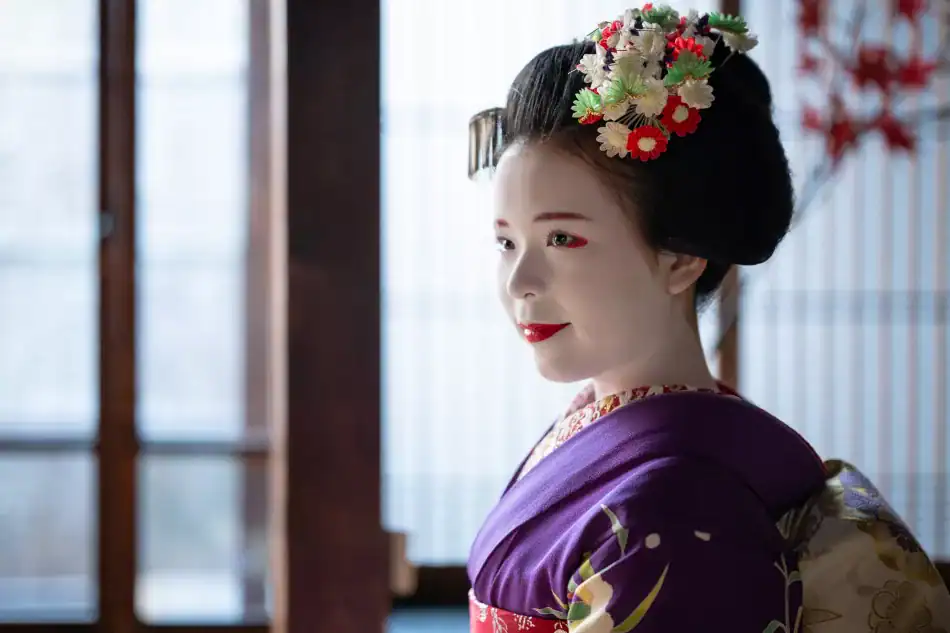
The first thing that occurred to me was how young she actually was. Most maiko begin their training as teenagers; Japanese compulsory education ends at junior high school. Masaya-san, our maiko subject for the afternoon, was just 16 years old, and under her white makeup, her youthful face glowed.
The next thing I realized is why maiko are often mistaken for being older than they actually are. Her daily training ritual instilled in her the ability to maintain perfect posture and move with a gracefulness that few others can. Like a classically trained ballerina, she flowed from room to room, posing effortlessly as if reading our very thoughts. Time melted away as our cameras clicked away, capturing hundreds, then thousands of images.
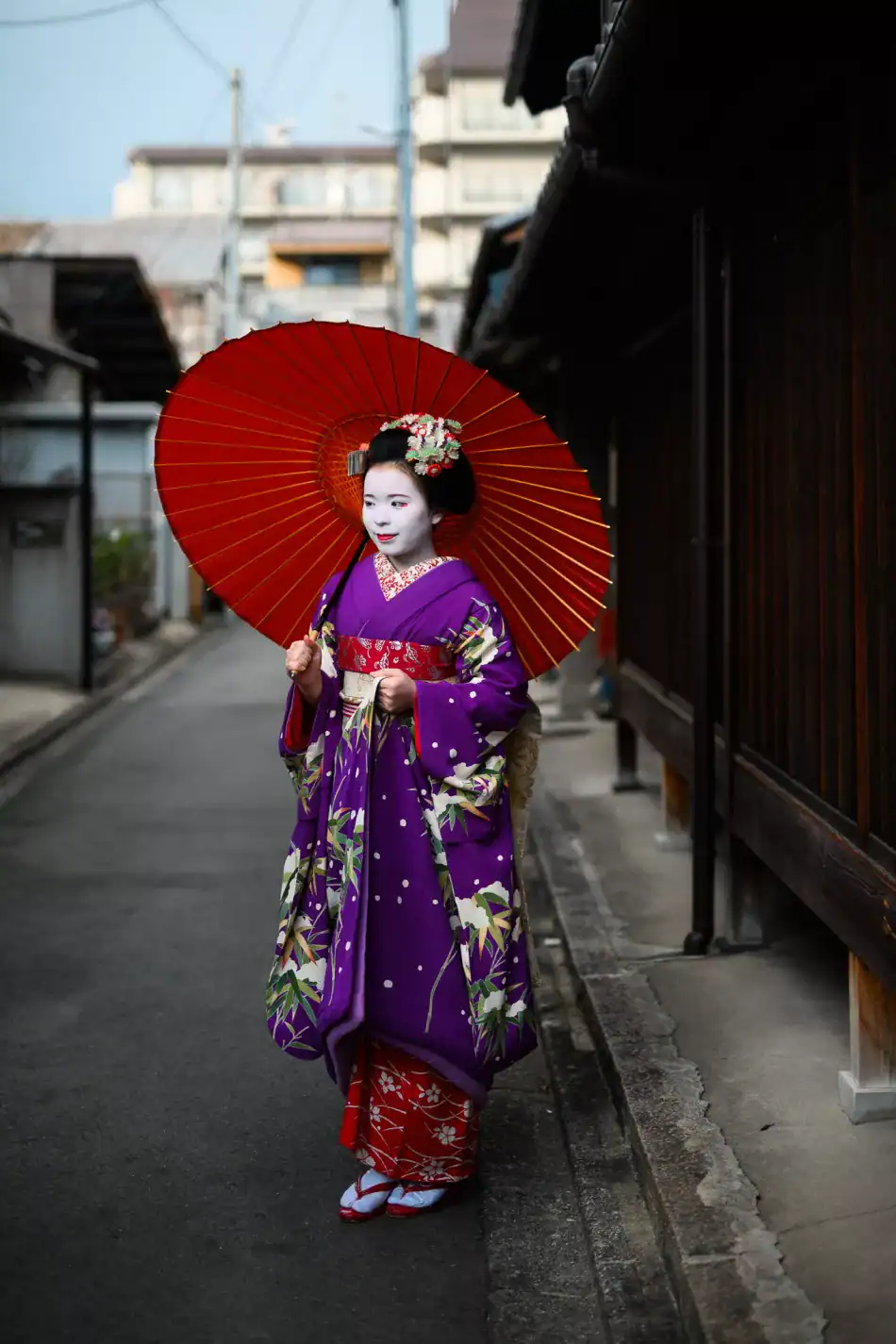
When we had our fill of portraits, Masaya-san had a parting gift for us, a traditional dance performance for an audience of two. If we could sense the depths of her physical training through the portrait session, her dance made it abundantly clear how skilled she was in the art of elegance. Every movement of her feet, tilt of her head, glance of her eyes was executed with the skill of one who had rehearsed them hundreds of times. Geisha had captivated audiences for centuries with their skills in the performing arts, and sitting just a few meters away from one as she performed, I finally understood why.
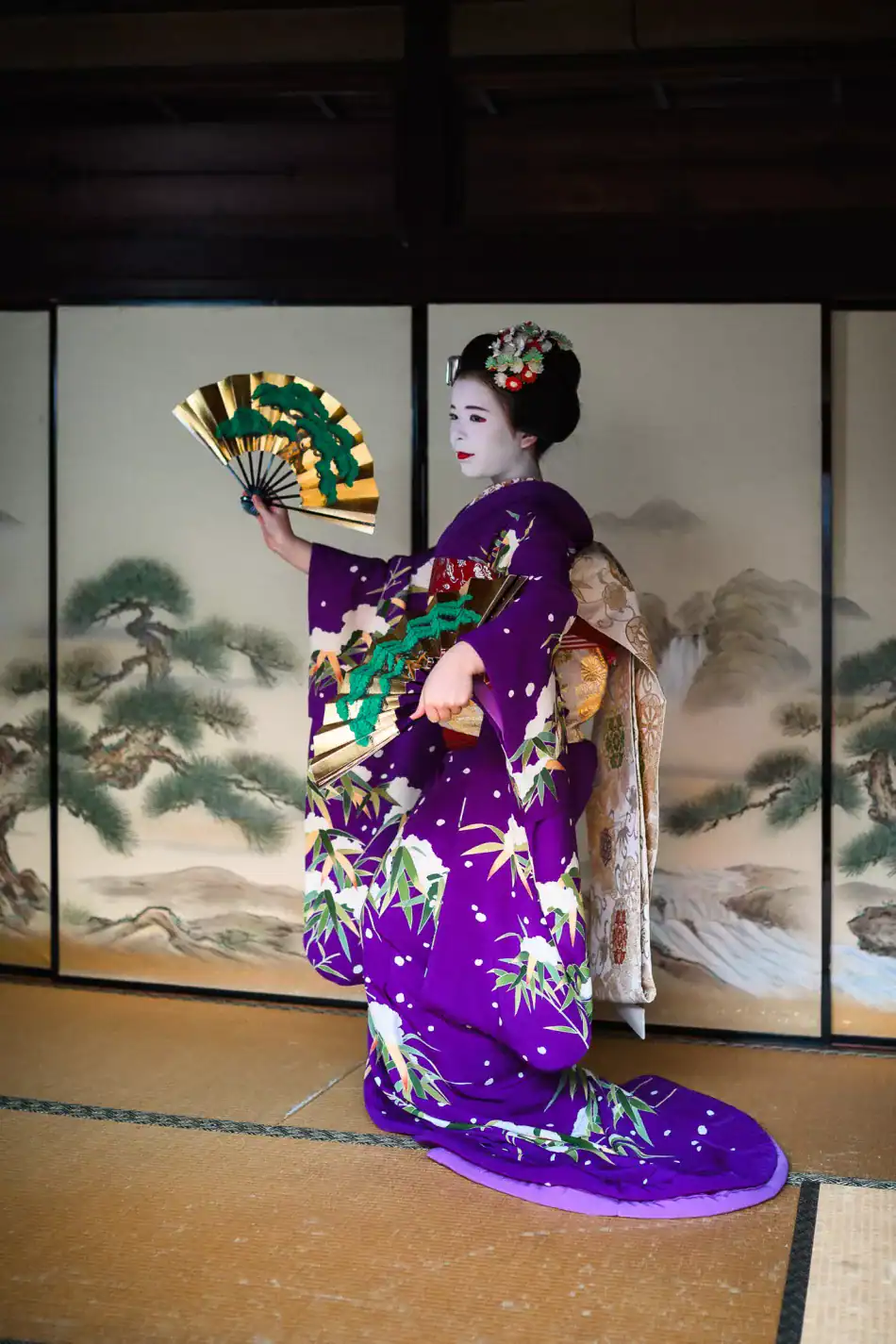
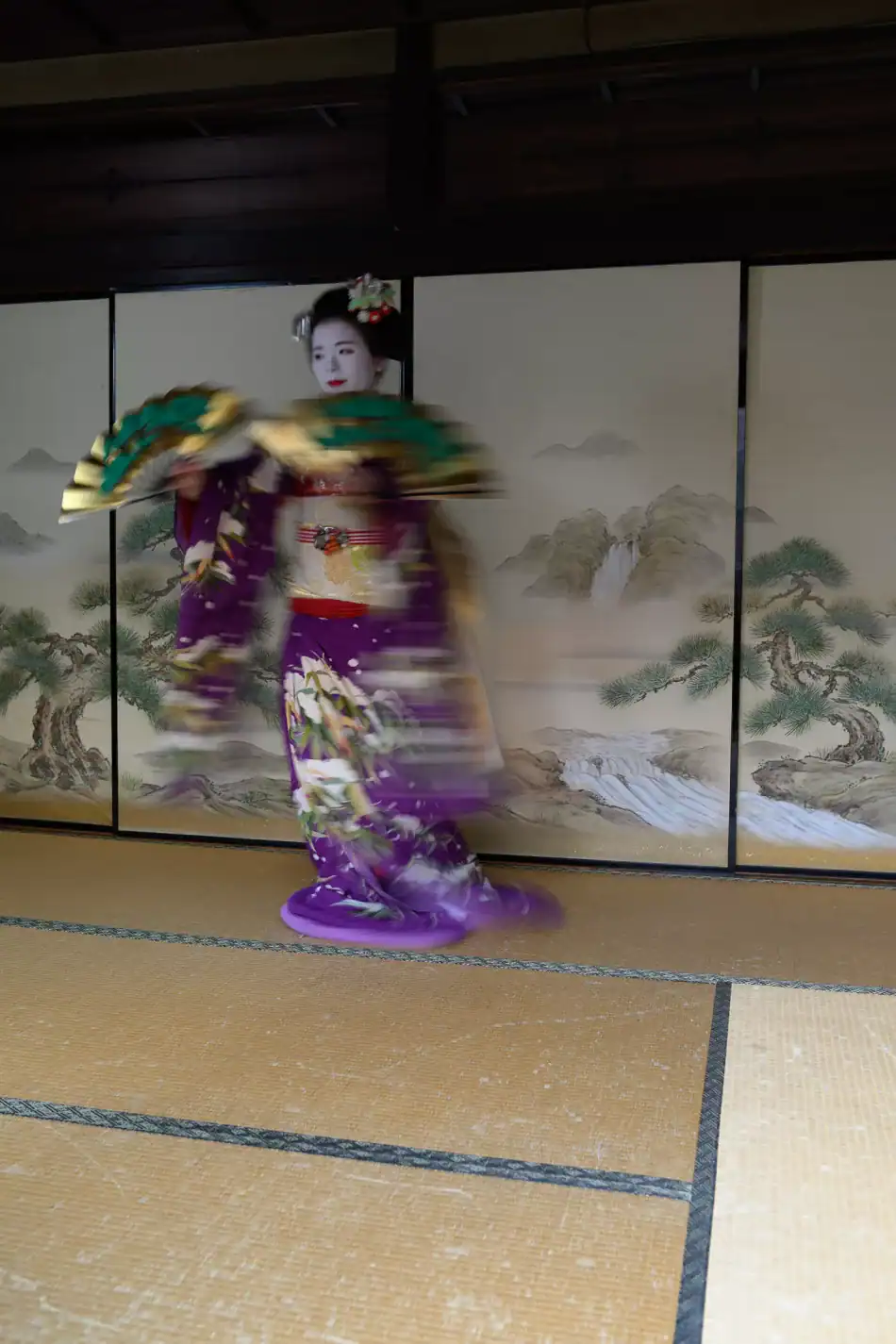
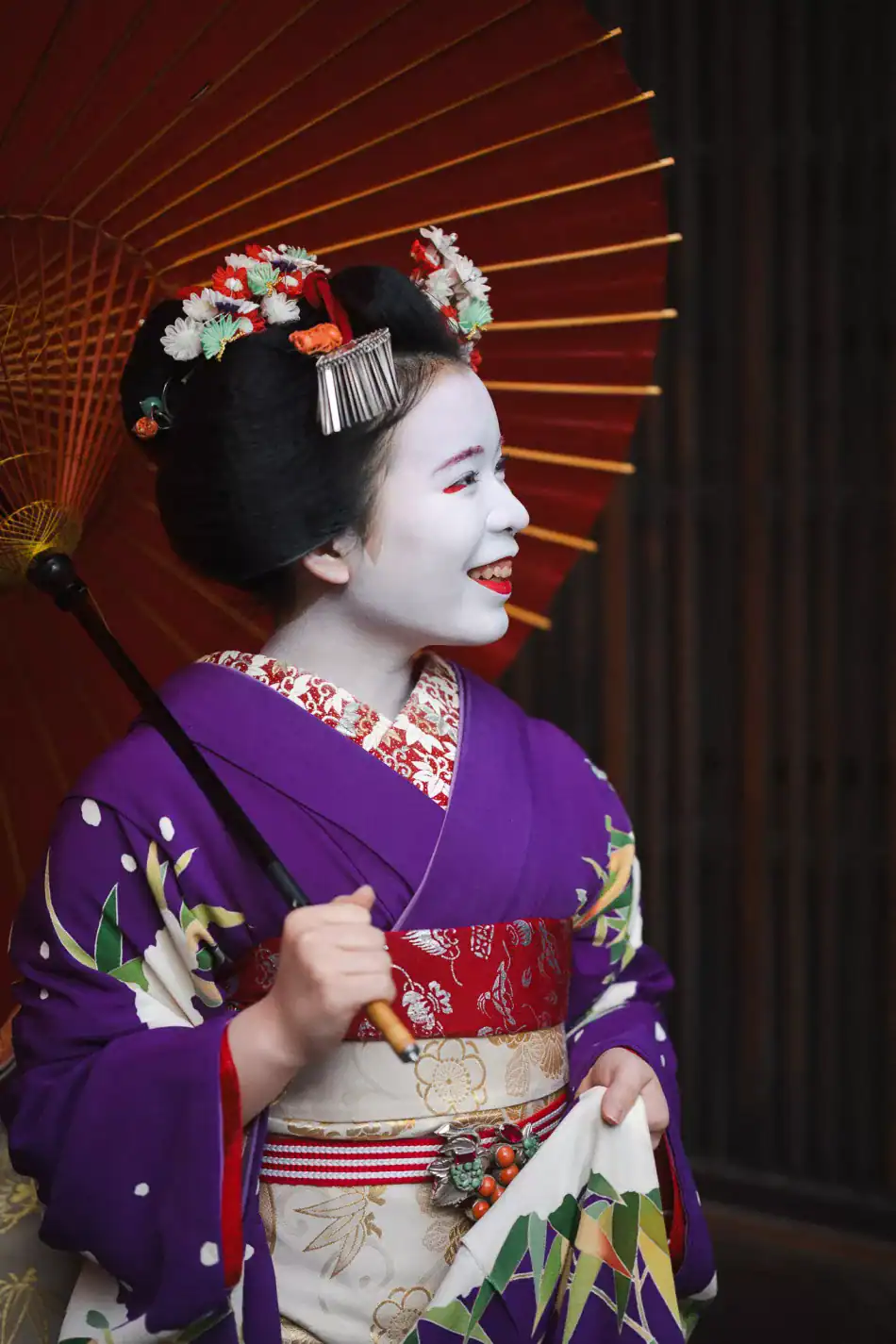
Concluding the dance, Masaya-san posed for a few more photos before gathering her belongings and waving goodbye at the entrance of the house, before leaving in a hired car sent by her okiya. Her cheerful smile and spontaneous laughter remind me that beneath the makeup and elaborate hairstyle, she’s a regular young woman simply doing something she loves and aspires to do.
About Japan’s Geisha Traditions and Culture
Kyoto’s geisha culture is the most famous, but working geisha still exist in several cities in Japan, including neighborhoods of Tokyo, Kanazawa, Niigata, and Morioka, to name a few. Kyoto maiko are unique in the rigor of the apprenticeship structure. The experience of Kyoto maiko can be gauged by their hairstyles, clothing, and accessories, which tend to become more subdued and elegant as they approach graduation into full-fledged geisha. Kyoto maiko also live in an okiya during their training period, a requirement that is not as strictly enforced in other parts of the country.
Private geisha performances are expensive anywhere in Japan, but especially in Kyoto, where demand is high. Most tourists try to get a glimpse of geisha performances during the Gion Festival, Miyako Odori, or large-scale events, although getting a good view can be challenging. There are also bookable events, such as a tea ceremony with a geisha, but these are usually semi-private, meaning you’ll likely share your time with a smaller group of other guests.
Geisha Photography Experiences
The opportunity to photograph a geisha specifically is rare; most interactions are strictly performances, and during those times, photography and videography can be prohibited to avoid distraction for other guests. That’s what made this particular experience so special for me. The photography itself was the main event of the interaction with the maiko, with the dance performance an additional treat at the end. Throughout the photoshoot, we had the chance to talk informally with the maiko and see her not as an icon of Japanese culture but as a real human being with dreams and aspirations.
Rare opportunities like this do not come cheap, but given that there are few good ways to photograph the beauty of Japan’s geisha culture, it was well worth it.