
The Insanity of 21st Century Japanese Katana Sword making

by | Jan 17, 2021

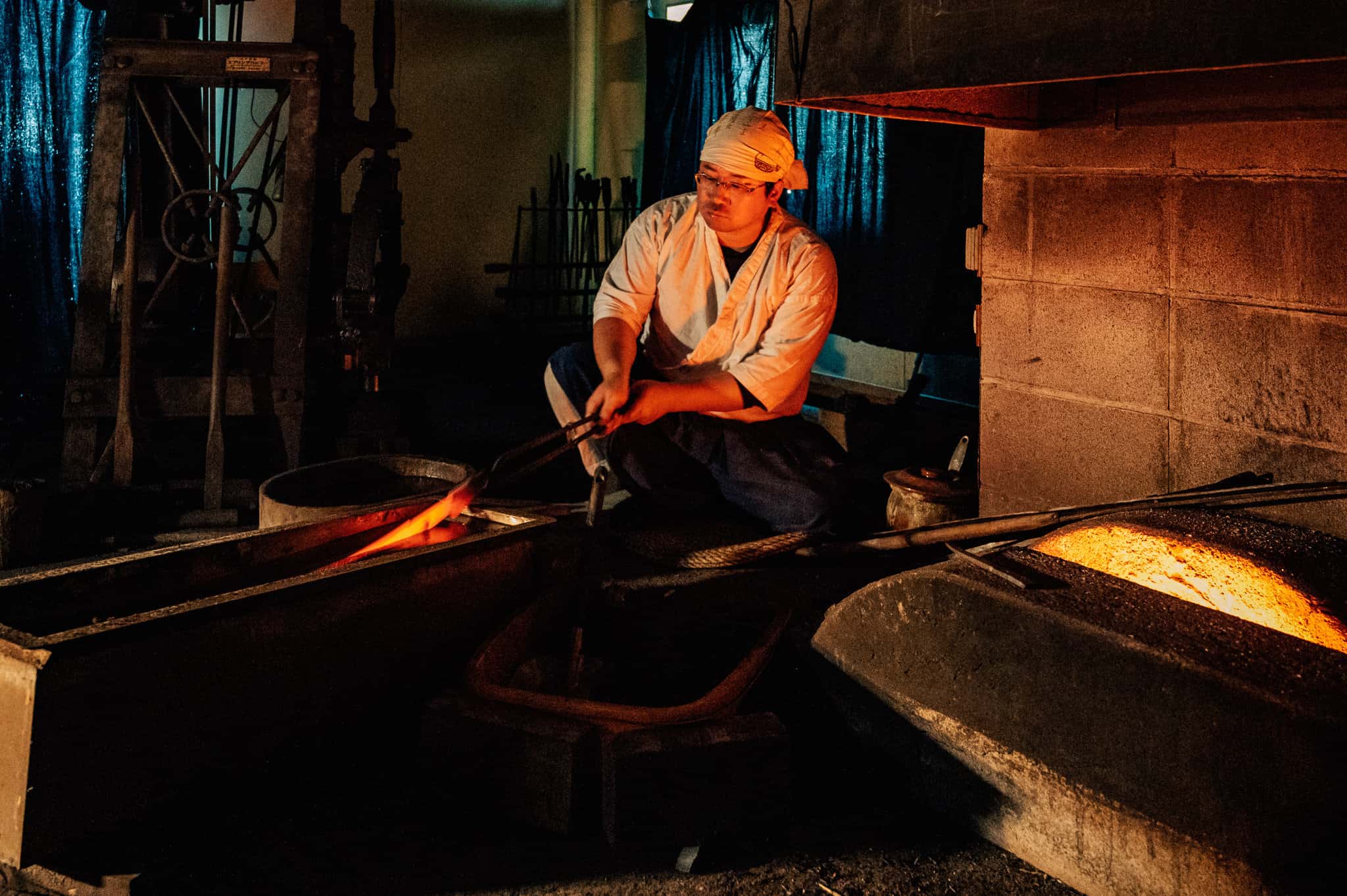
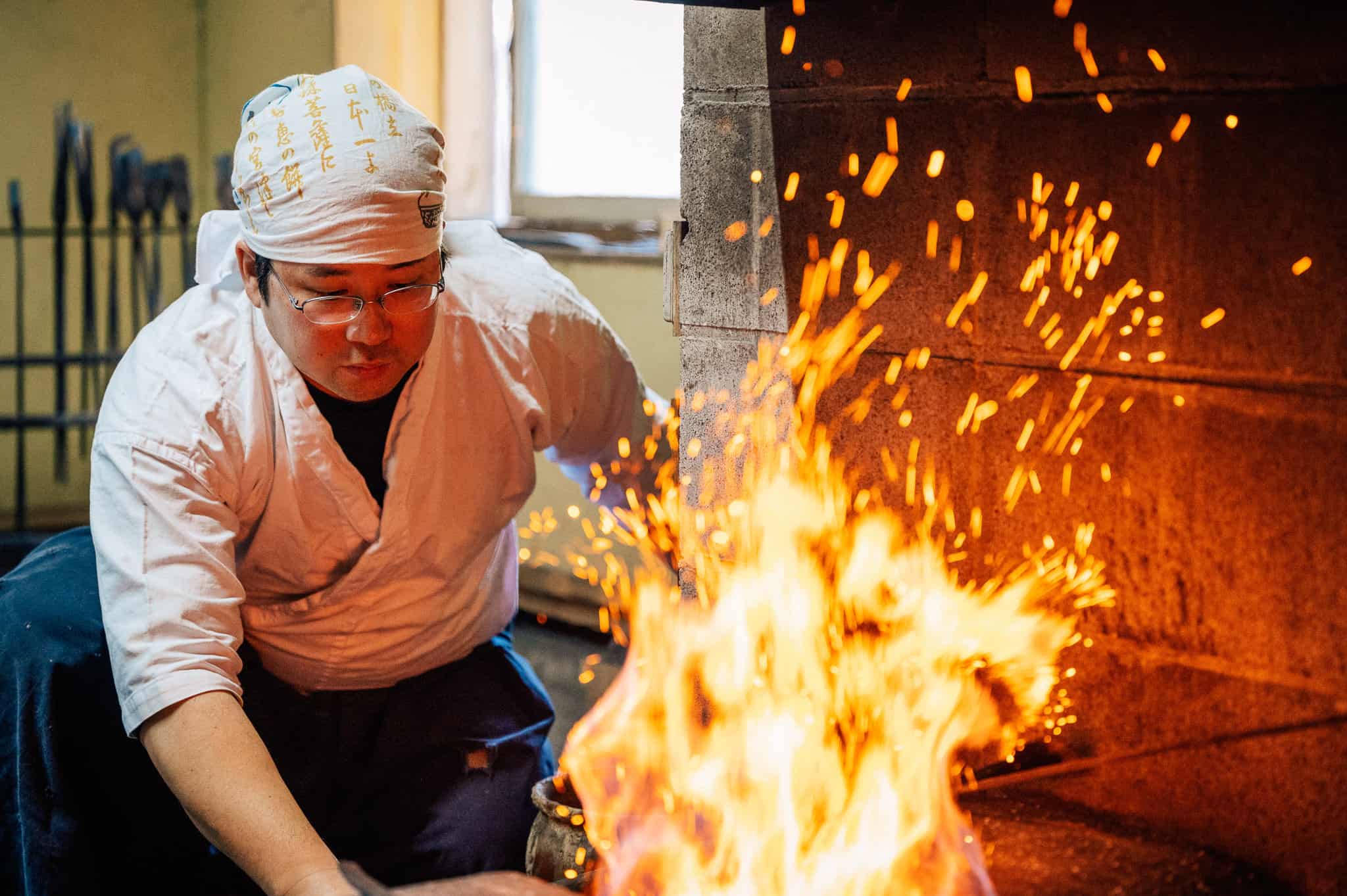
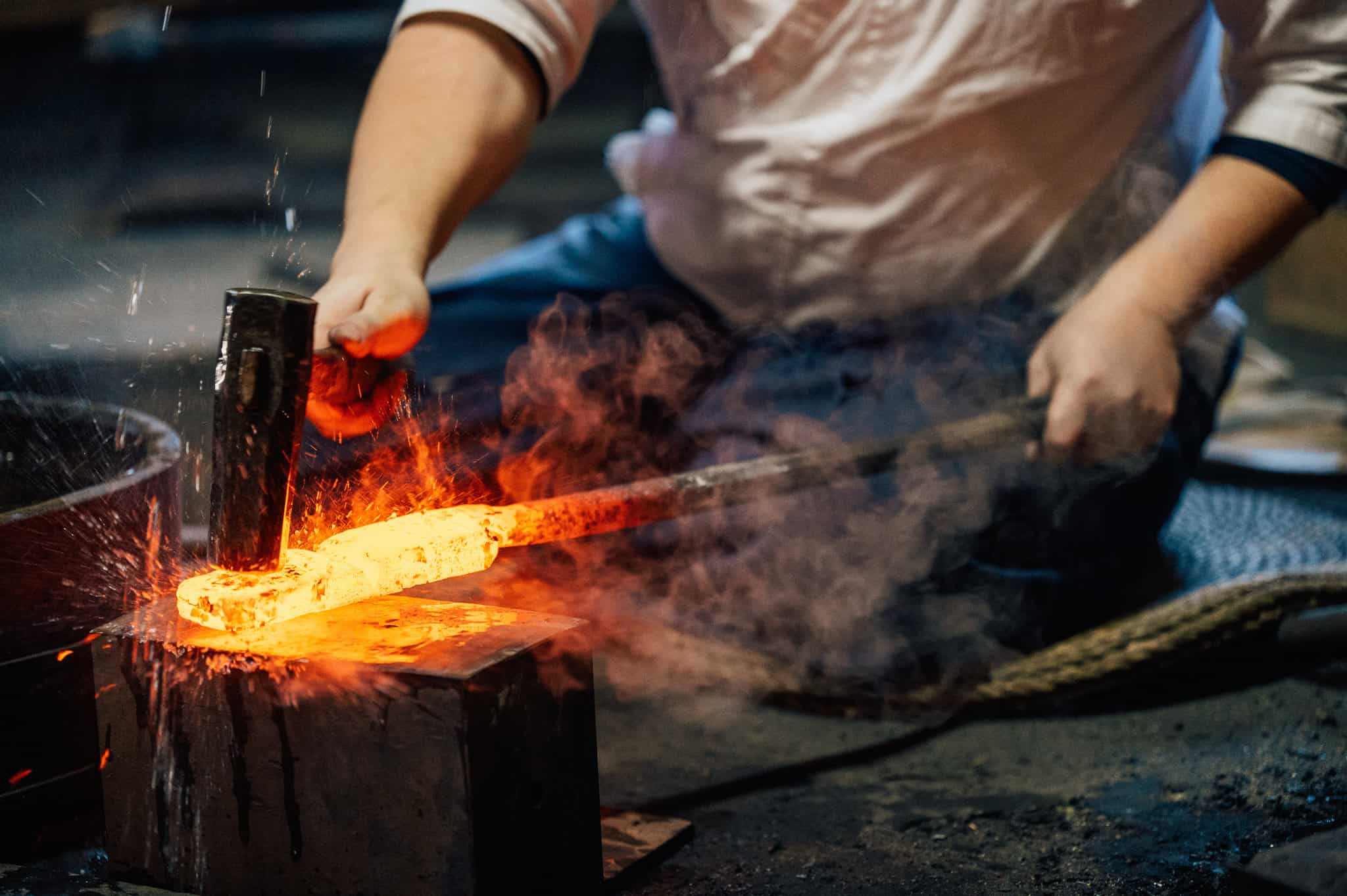
WHEN YOU FIND YOURSELF sitting before a man with an unsheathed Japanese katana sword in his hand, it is best to take his words seriously. The master swordmaker Nakanishi-sensei retold a story once told to his master by the master before him, about the serious nature of guarding the secrets of their craft. It seems an apprentice once dared to test the temperature of the water used for quenching the steel after it was drawn from the fire and pounded into a  sharpened blade. He slyly stood near the trough and dipped his index finger into the water, but he was not sly enough. His master, assuming treacherous intent, quickly drew his sword and sliced the apprentice’s hand clean off at the wrist. Perhaps the punishment came too reflexively, as the master considered his apprentice, now writhing in pain before him. Indeed, his finger had felt the water temperature, but his brain remembered it. So his head was the next appendage to go.
japanese katana sword maker in kyoto

It should be noted that Nakanishi-sensei recounted this story with a mischievous gleam in his eye and ended it with a hearty laugh; nonetheless, I stayed at least a meter from the water trough with my hands thrust deeply in my coat pockets.

Standing in the workshop of the last active swordsmith in Kyoto Prefecture, it is unclear what era you exist in. There are no tools in the workshop that couldn’t have been made 100 years ago. The smell of charcoal, hot iron, and sweat are likely the same odors infused in the smocks of Japanese swordsmiths when their clients were actual samurai, not curious collectors of fine objects. Though the clients have changed, the men behind the craft remain the same: madmen obsessed with the quality of their blades.

I wondered what kind of person would dedicate themselves to a life of a swordsmith in the 21st century. After all, here in rural Kyoto, Nakanishi-sensei works alone every day, often in the dark, with heat equal to an incinerator close at hand. Yet, when asked about his favorite era of swords, his eyes light up like a a boy unwrapping an XBox on his birthday. He recounts his favorite era of swords in enough detail to keep us interested yet not enough detail to bore us to tears. Nakanishi-sensei is not just a master of swords, but a master of telling stories of the sword.

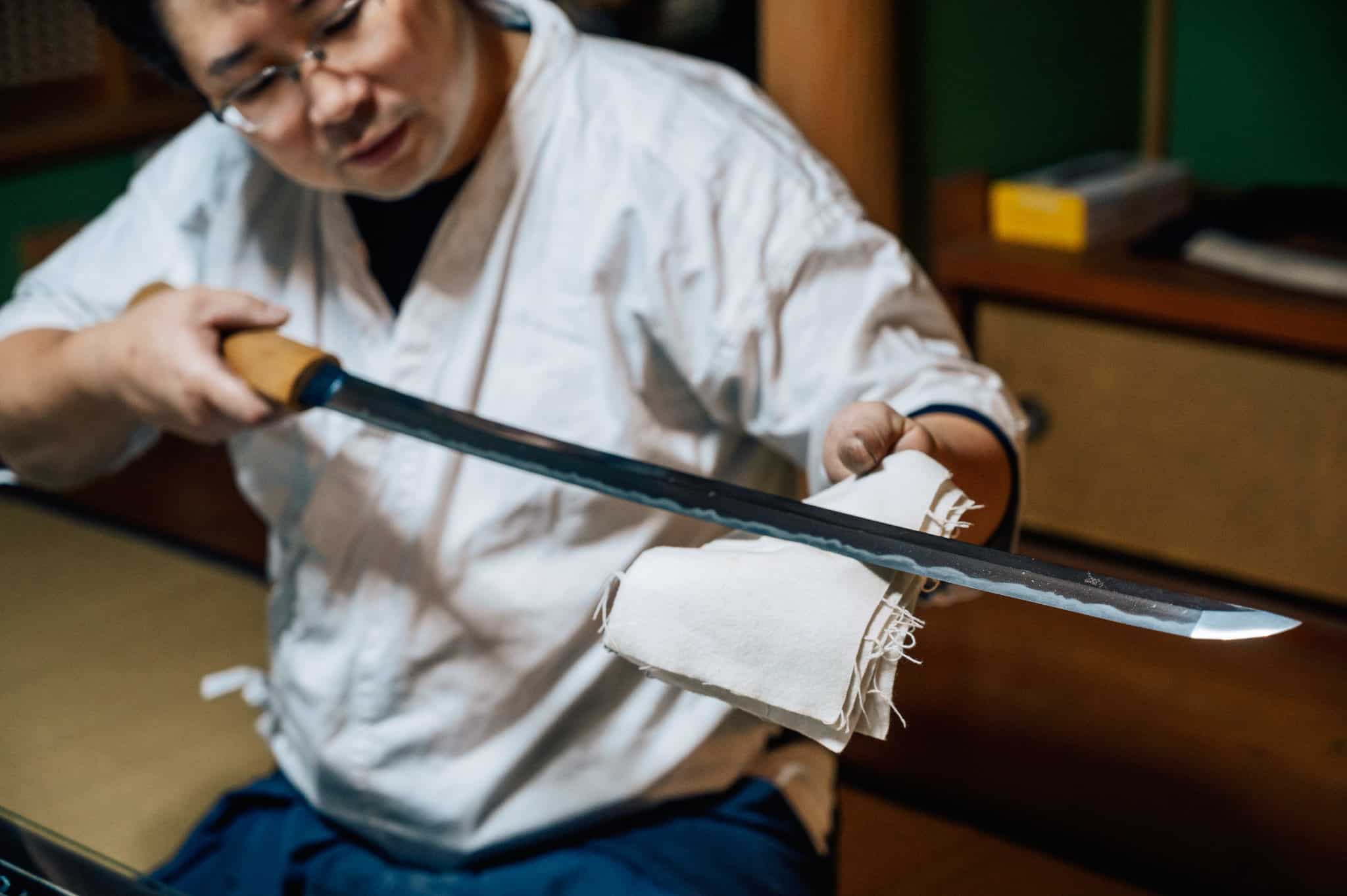
In the end, I concluded that Nakanishi-sensei was not mad at all, but a man who understood how to take a childhood passion and make it a lifelong pursuit. This passion drove him to complete his 10 year training period in 7 years and now drives his extensive client list, through which he has enough current orders to keep him busy for the next year. As he turned a finish blade over in his hands, I caught the reflection of the master in it. I realized that the image of the man in the blade was the master himself, exactly who and where he wanted to be.
 

making a japanese sword in kyoto

If you’d like to learn more about Japanese katana swordmaking in the countryside of Kyoto, please read the article by my friend and colleague Don Kennedy on Voyapon.com.

Long Walks in Tokyo – From Ginza to Shinjuku

This 3-hour long walk through the heart of Tokyo passes through some historical districts, near a major shrine, and an endangered baseball stadium where Babe Ruth once played.

A Dance of Grace and Fools

The dancers are fools, everyone is a fool, so why not dance? A glimpse at Japan’s Awa Odori festival.

We, Like Ants

In thousands of years and the absence of social media, our descendants will be left wondering why we travel like we do.

Why You May Never Go To Kochi (Even Though You Should)

Ask many city-dwelling Japanese if they have ever visited Kochi Prefecture in the southern part of Japan's Shikoku Island, and the reaction might include a bit of teeth-sucking. 行くにのちょっと不便だねー Iku ni no chotto fuben da ne? "It's a little...

The Long Walk – Discover the Real Tokyo Without the Crowds

Walking in Tokyo gives you a true sense of the city’s scale and how it has evolved through time. You’ll get a better understanding of Tokyo’s culture on a two hour stroll through its streets than a week riding around in trains and taxis.

Could Yamaguchi City Become the New Kyoto?

In 2023, writer Craig Mod created quite a stir in the sleepy town of Morioka in Iwate Prefecture by naming it as his pick for places to visit in 2023 for a New York Times article. A media frenzy ensued (especially here in Japan, where...

Ginza Sony Park – An Architecture Driven Community and Art Space

While many companies in Japan give lip service to community space and sustainability, Sony delivers it in one of the most expensive real estate areas in the world.

Learning to Fly (A Drone)

Once you have tasted flight, you will forever walk the earth with your eyes turned skyward, for there you have been, and there you will always long to return. Against my better judgement, I am learning to pilot a drone. The fact that I am...

How Hachiko the 100-year-old Dog Still Inspires a Nation

Japan's most beloved dog, Hachiko celebrates his 100th birthday this month, or in dog years, his 700th birthday, which is approaching Dog Methuselah years. Of course, dear Hachiko is no longer with us, having crossed the Rainbow Bridge in...

Follow the Edo Shogun Roads To Japan’s Samurai Era

Over 400 years ago, the Japanese Shogun Tokugawa Ieyasu established his seat of power in a swampy bayside fishing village far removed from the nation’s imperial capital of Kyoto. The sleepy town of Edo seemed an unlikely place to begin a...

Pin It on Pinterest

Share This