
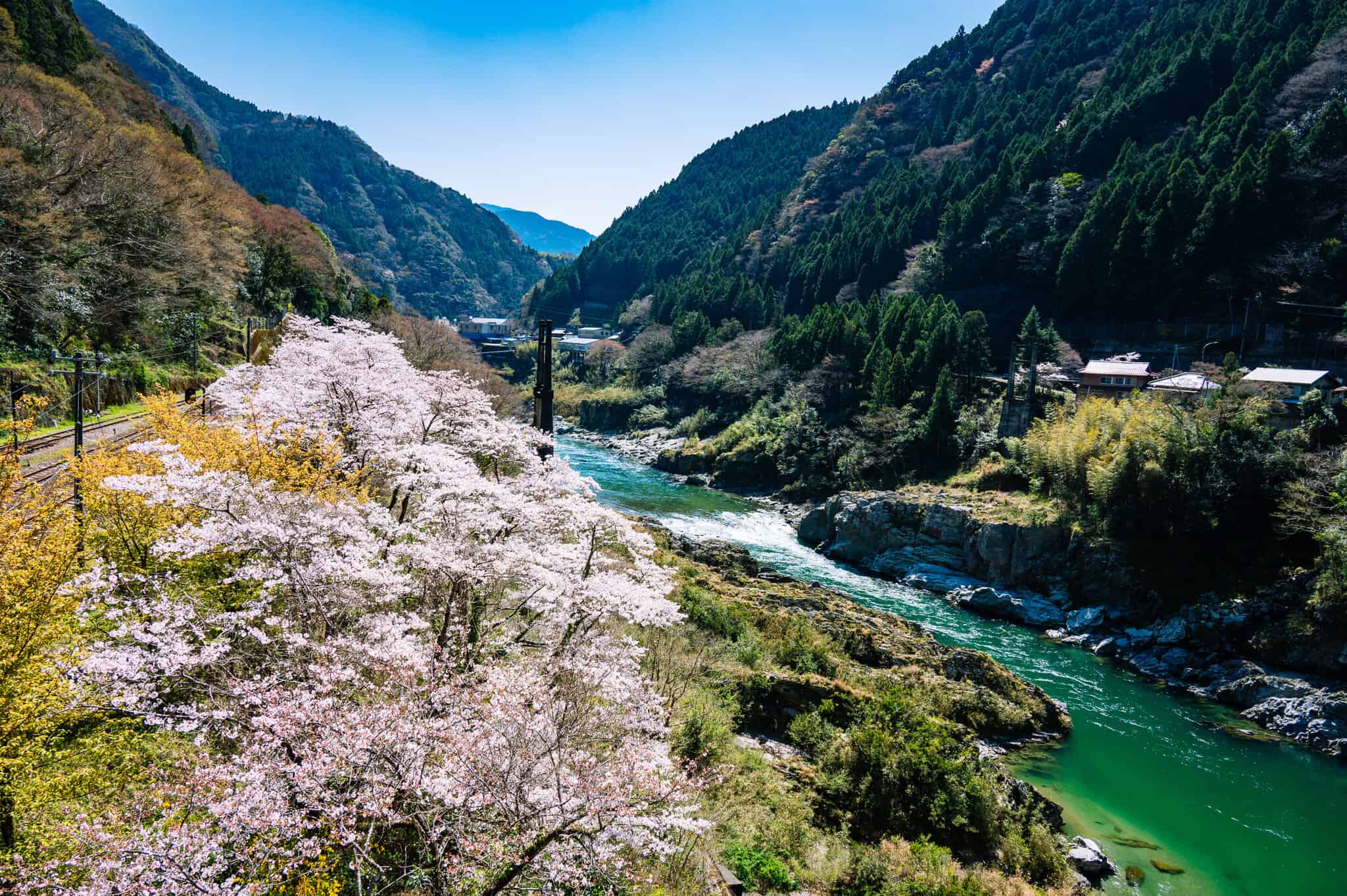
Route 32 is the main access road to the Iya Valley, an ornery road that only begrudgingly allows access to the deeper regions of this ancient valley. At times it is barely wide enough for a small car, with a sheer cliff on one side and a scattering of recently fallen rocks on the other. You hope and pray that nobody is coming down the road in the opposite direction, and for miles at a time, your prayers are answered.
There are few places to park along the road. Even the famous Peeing Boy statue that sits on a precipice 200 meters above the valley floor is just a casual pause along the highway. Pull over to the side of the road, turn on your hazard lights, and snap your social media photo; gone in 60 seconds.
You come to the Iya Valley to escape. In modern terms, you might be fleeing the madness of dealing with the coronavirus pandemic for months on end, hoping to find a place where you can tear off your mask and let loose with a primal scream. 800 years ago it was the Taira Clan, or the remains of them, fleeing for their lives at the hands of the Minamoto Clan, as told in the epic “The Tale of Heike”.
In those days, the valley was so wild, so completely unknown that the Minamoto scarely bothered to pursue the Taira into the valley, leaving them for dead. Legends say some survived, becoming the first settlers of this beautiful rugged land.
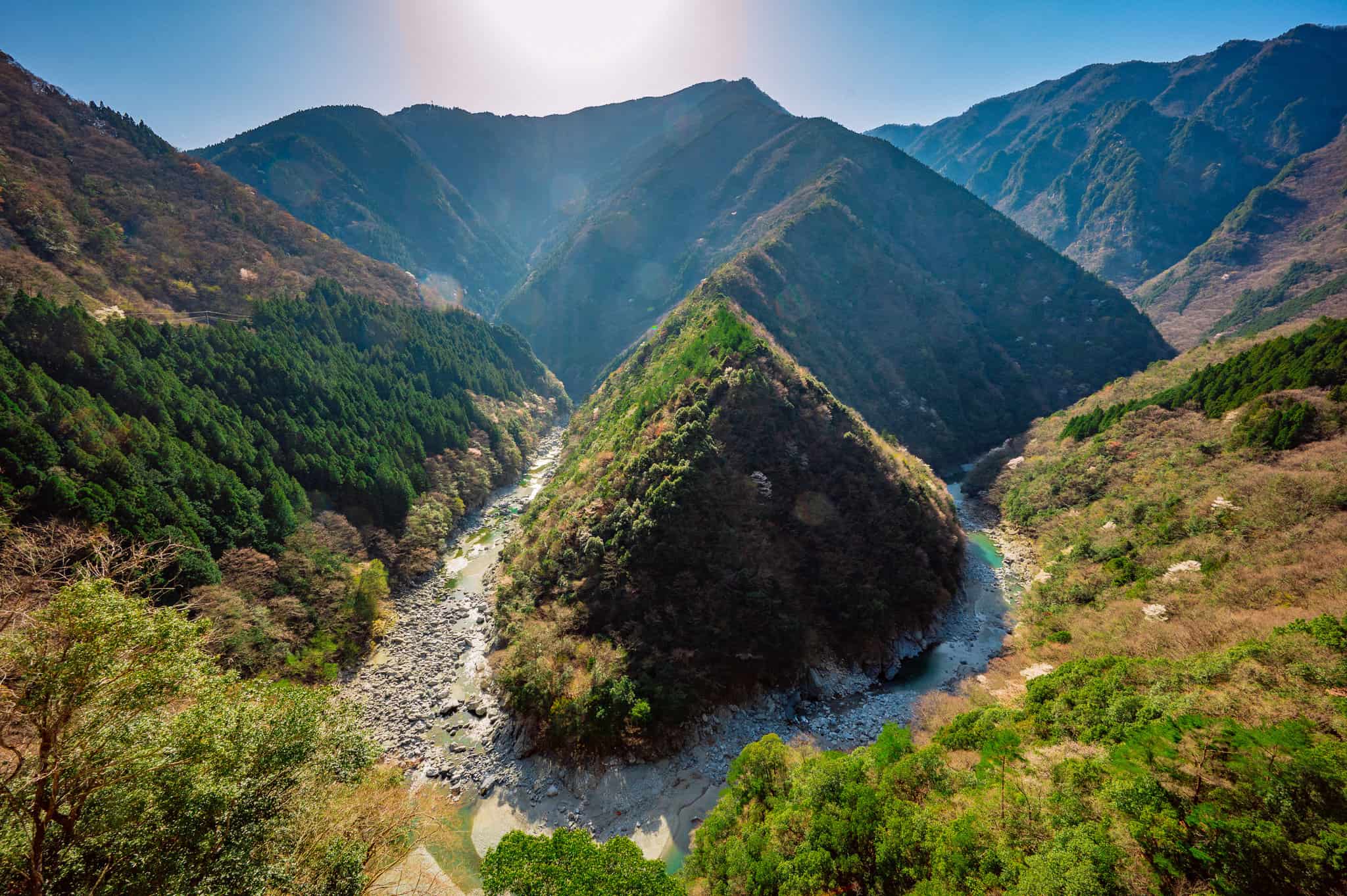
Coming from Tokushima city as I did, you might be tempted to enter the valley from the east on Route 438, which according to Google Maps, will shave about 30 kilometers from your trip. The same Google Maps will also tell you that taking this route will add 30 minutes to your trip duration, a conservative figure only to be taken literally if you are a seasoned driver on the backroads of Japan with ice in your veins. Trust me; it is better to take the longer route and enter from the west, where the modern section of Route 32 brings you to the edge of the valley along the emerald-hued Yoshino River and the famous Oboke Gorge.
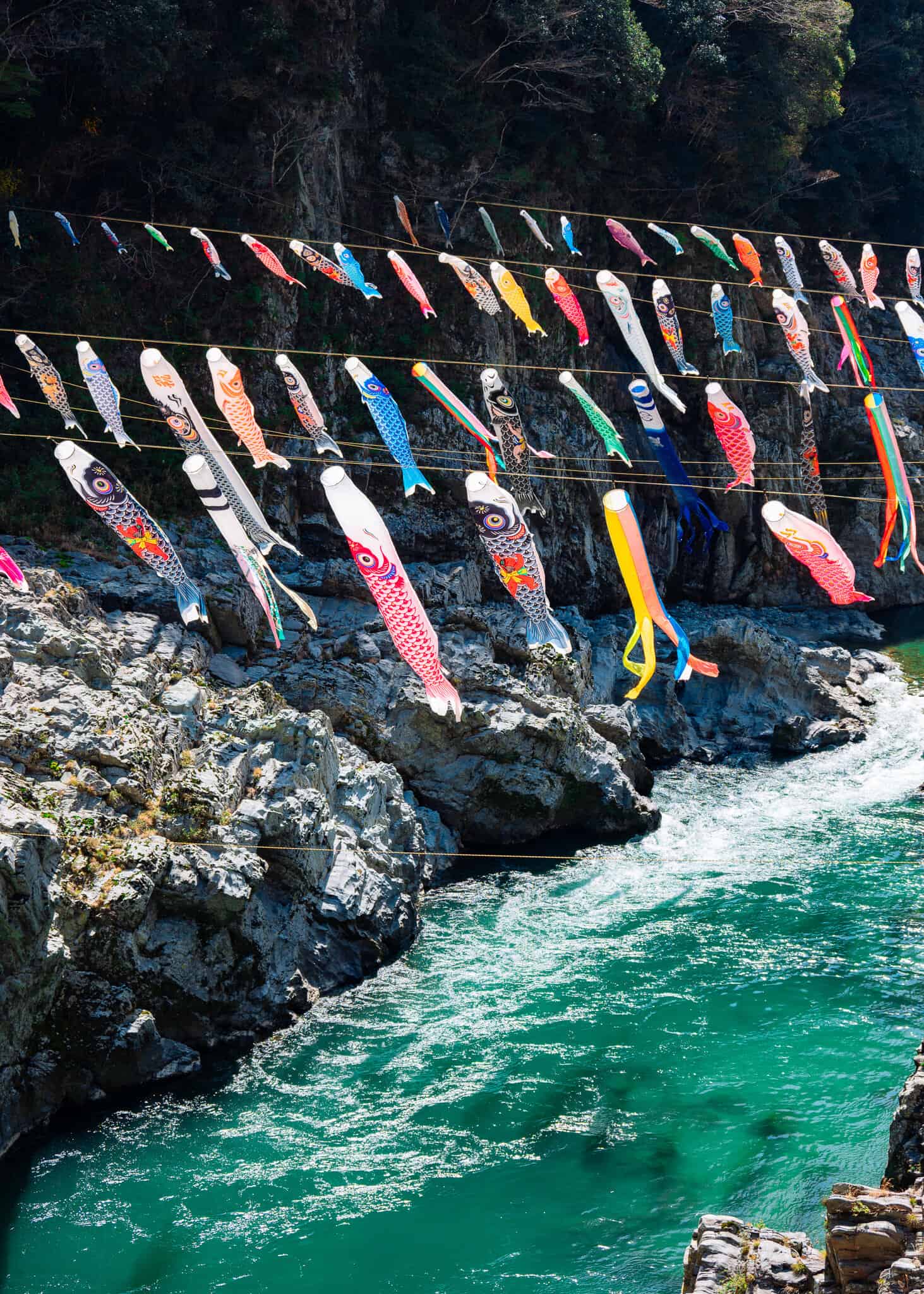
Pause for moment to enjoy the sight of the Anpanman character train crossing the river or the koinobori floating in the wind over the gorge. Then drive through the long tunnel connecting Oboke with the Iya Valley and emerge on the other side, seemingly in another time.
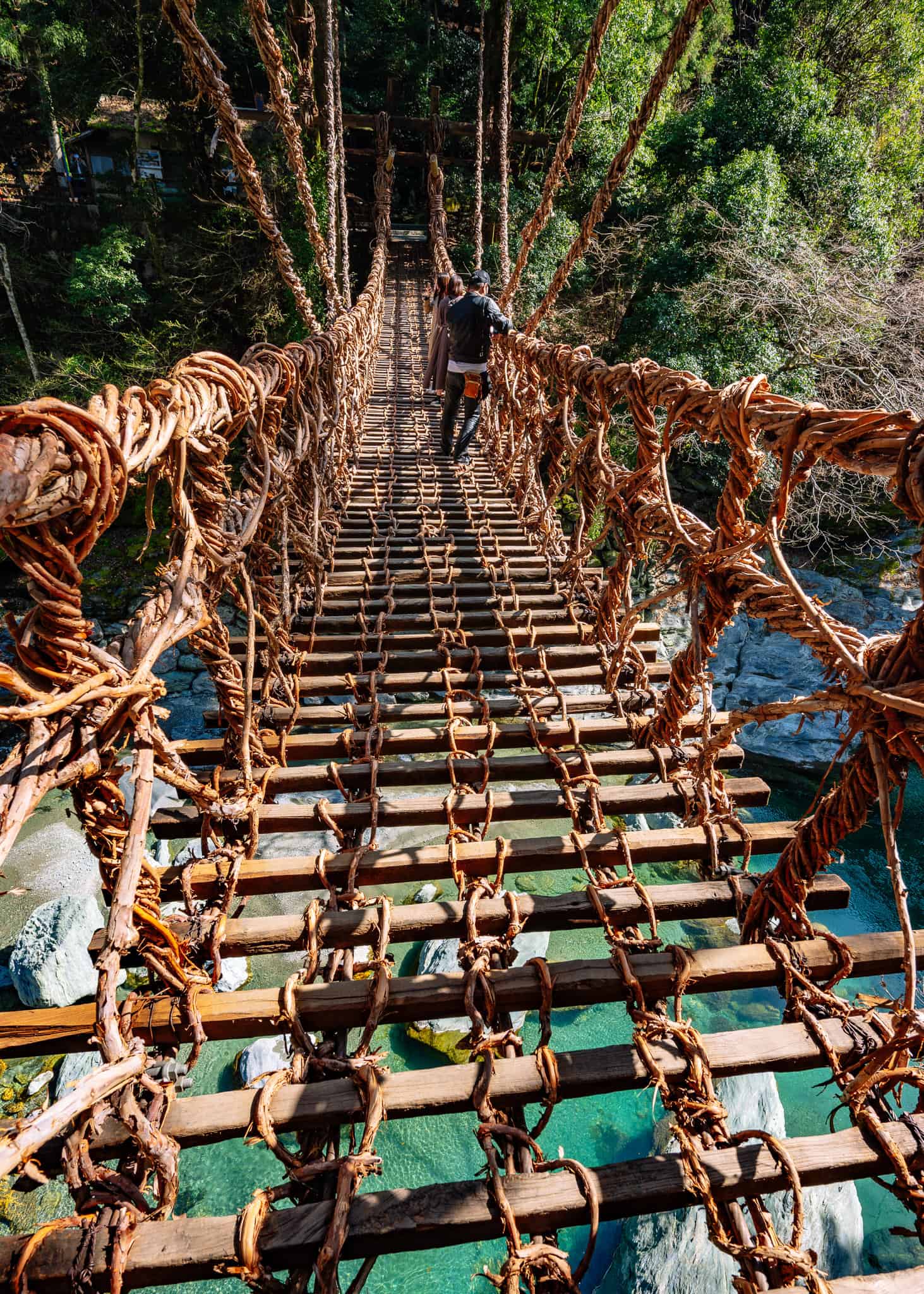
Perhaps the most famous destination in the Iya Valley is the 800-year-old bridge that was constructed by the Taira as a way to escape the pursuing Minamoto forces. Of the 13 original bridges, 3 remain, the Kazurabashi Bridge being the most popular to cross. For a mere 500 yen, you may have the pleasure of crossing this bridge of vines, which is equal parts empty space and solid materials. If you have a fear of heights, this experience will fuel your therapy sessions for months to come. For some odd reason, the tourism bureau did not want me to mention that the current iteration of the bridge is rebuilt every 3 years with steel cables hidden under the vines, the only reason I can sleep through the night after my experience.
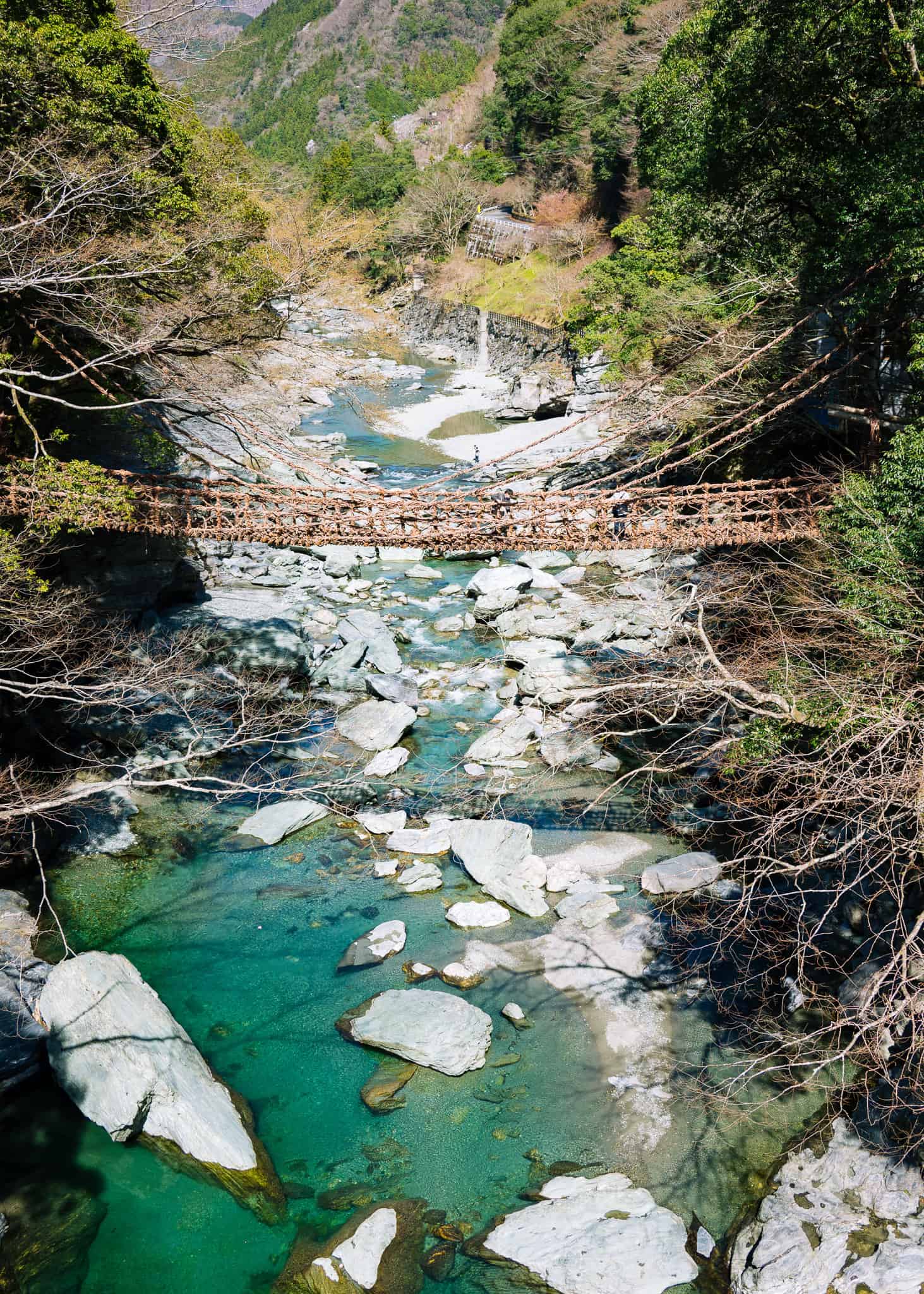
This is as far east as most travelers will come. Beyond the bridge, the road becomes narrower and feistier, the scenery less dramatic. But I persisted, arriving 45 minutes later at Ochiai village, a hamlet built along the steep face of the mountainside along the valley. The tiny village spans 400 vertical feet up the face of the mountain and contains a small shrine hidden in a grove of cedar and importantly, eight historic folk houses called kominka that have been restored and modernized for out-of-village visitors.
If you are serious about using Iya Valley as an escape, here is your chance to disappear into the rugged land for a day, maybe two. Prepare a simple meal or have a local resident deliver a traditional Iya Valley dinner. Wake to the sunlight streaming over the sharp peaks of the mountains, through the rice-paper shoji, and onto your face. Forget for a while where you came from, how you got there, and what’s waiting outside. This is the Iya Valley, sitting at the edge of the world, sometimes just beyond it.