
“The city is so hard. Just cement on top of dirt on top of rock. Even weeds have trouble growing here.”
Butsu Shoku kicks at the asphalt beneath her feet. The long vine of pothos trailing down her sleeve swings freely. Butsu is part of the growing movement of young fashion icons embracing a greener future for Tokyo, literally. Seven months ago, she co-founded the Houseplant Fashion Movement with her friend and sharehouse-mate Yasai Midori, and things grew quickly in a way neither of them expected.
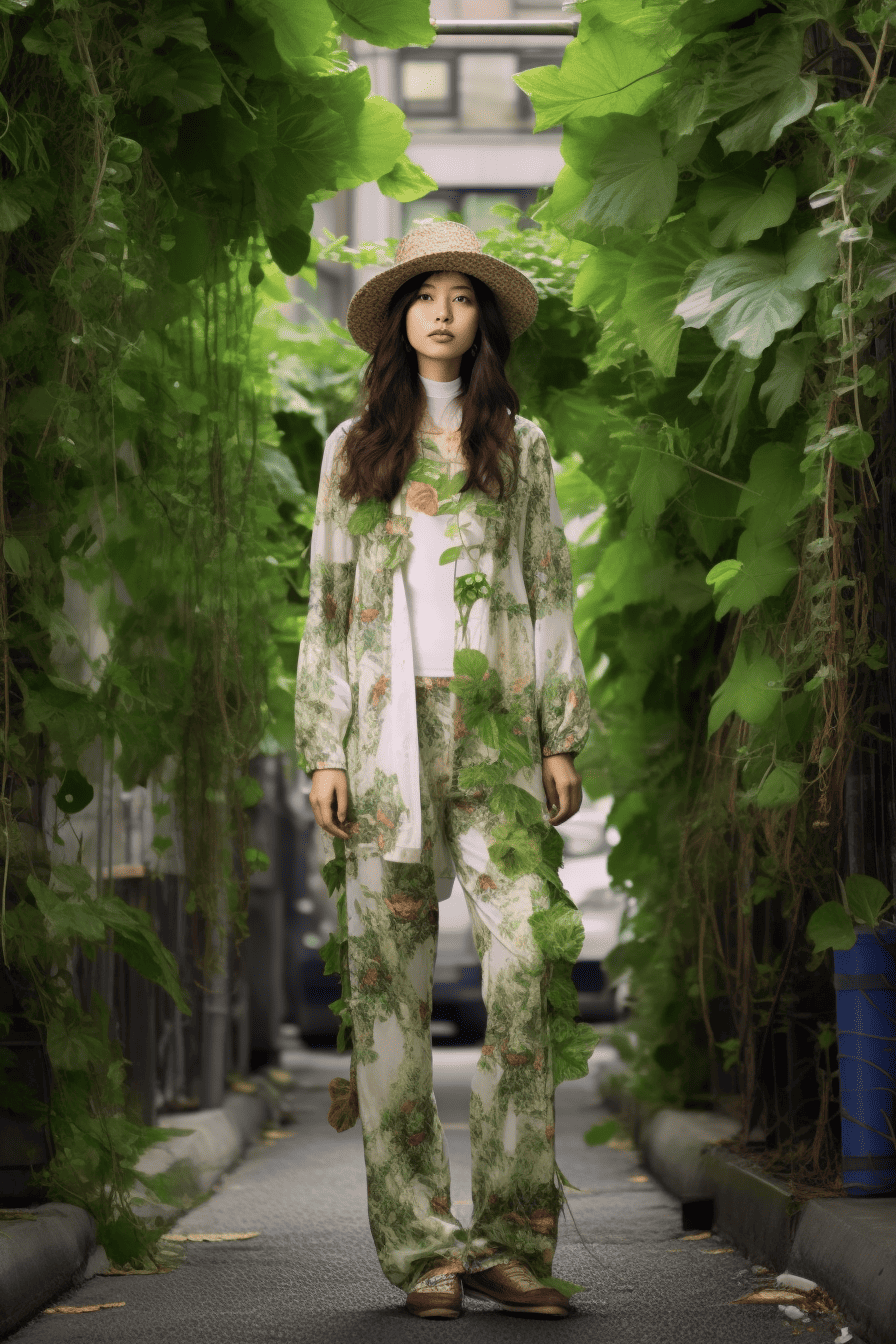
“To tell the truth, we thought we might be the only ones willing to wear houseplants as articles of clothing. But when I published my first fashion reel on Instagram, it received nearly 600,000 views. And people began to join us.”
How Green Fashion Is Changing The Tokyo Landscape
Green space has become more of an afterthought than a plan in a city where the cycle of building and rebuilding continues to reshape neighborhoods until their roots are unidentifiable. Vertical green space on the sides of skyscrapers might be nice to look at, but is no place for children to play. The parks scattered around Tokyo for children to play in are often covered in dirt or soft rubber. The city will say that it is for child safety or to reduce the cost of maintenance for taxpayers, but the result is still the same; fewer and fewer urban children know the feel of soft grass beneath their feet. Worse still, as global temperatures continue to climb, summer temperatures in the city have reached dangerous levels.
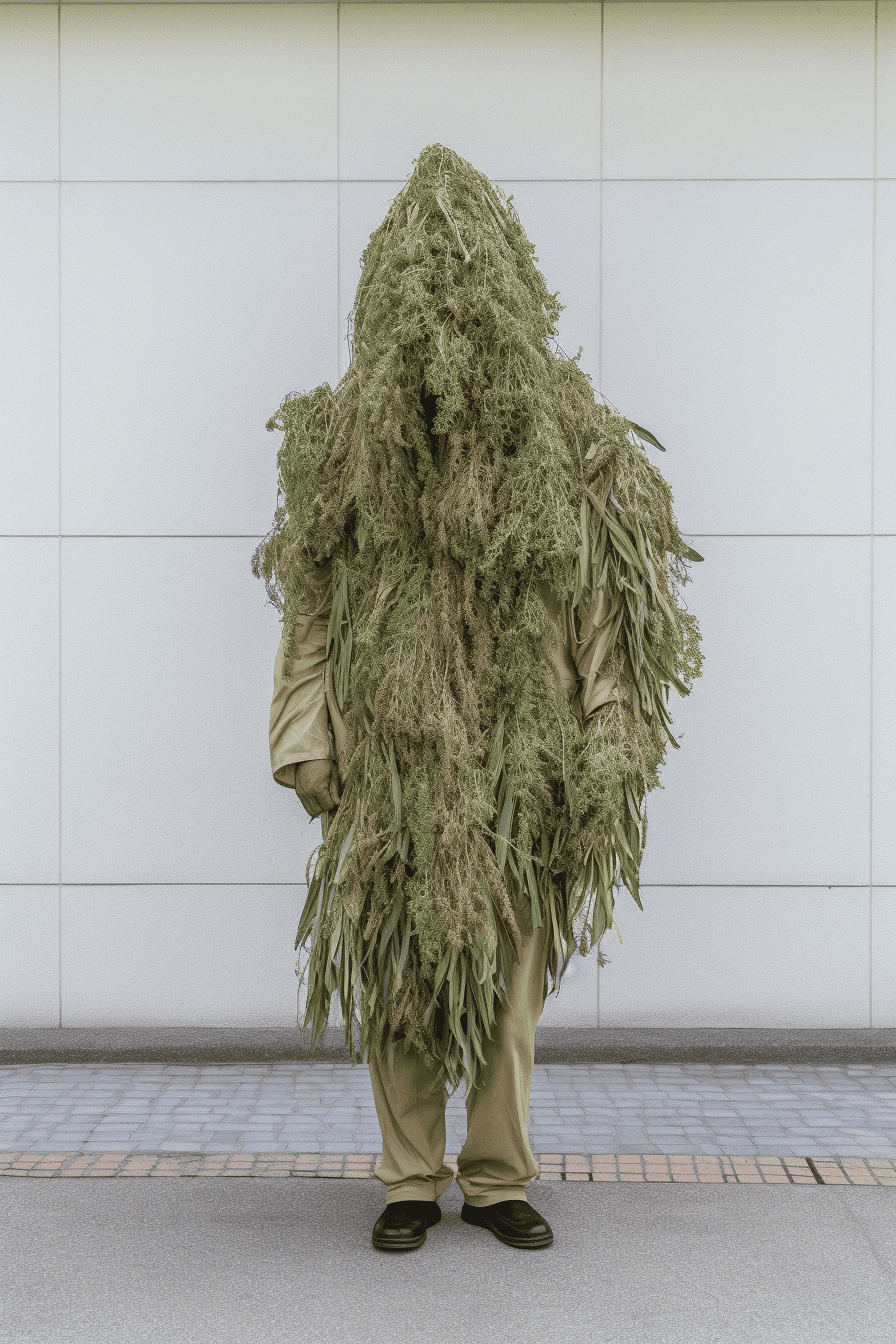
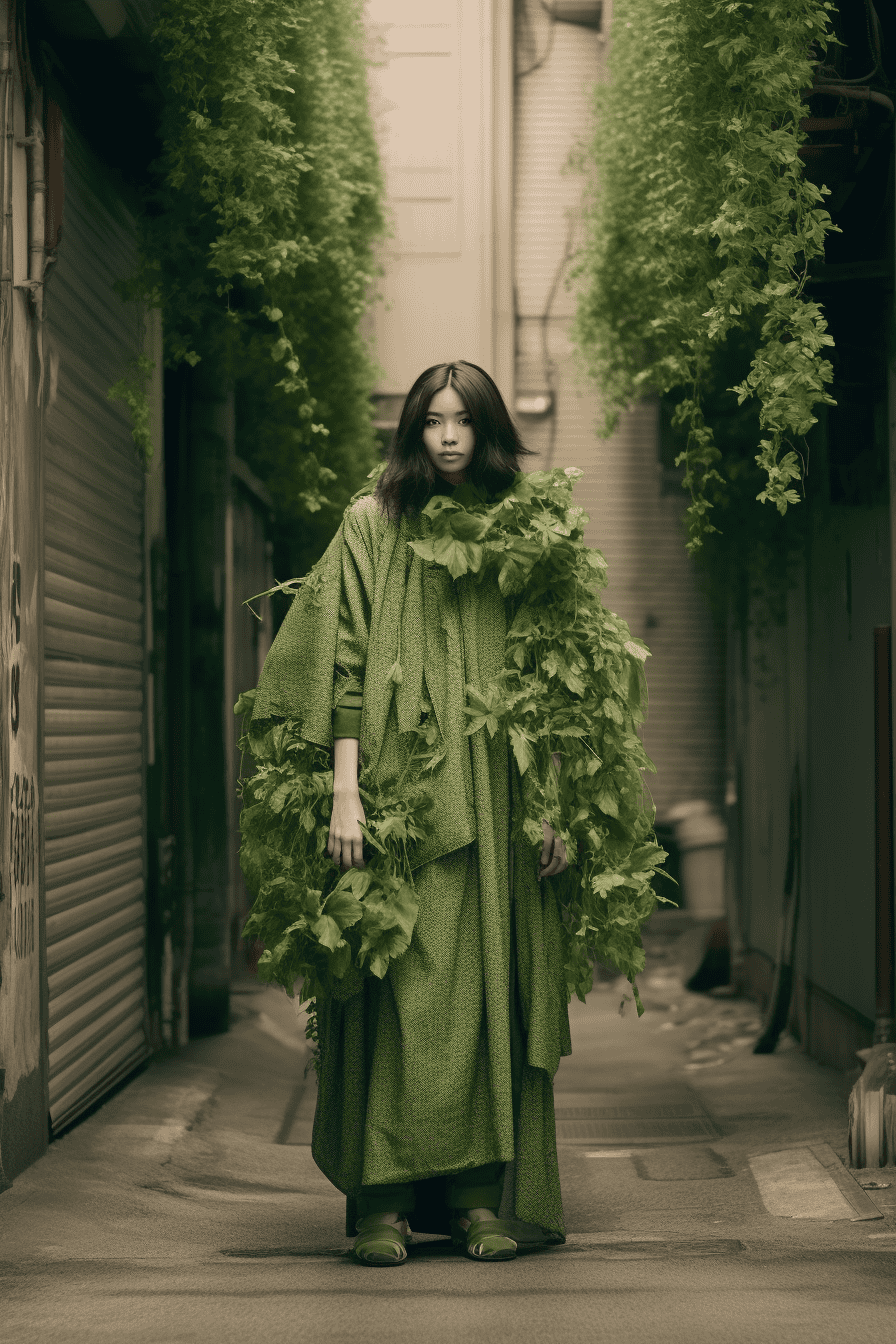
“My mother told me that when she was young if it reached 30 degrees, it was a hot summer day. Now a 30 degree day in July or August would be a relief,” recalls Yasai.
Yasai says plants are necessary to combat the effects of global warming, but Tokyo is ill-suited for large-scale green space due to the astronomical costs of real estate. Instead, she says people can wear plant-based clothing and become living gardens that flow throughout all areas of the city.
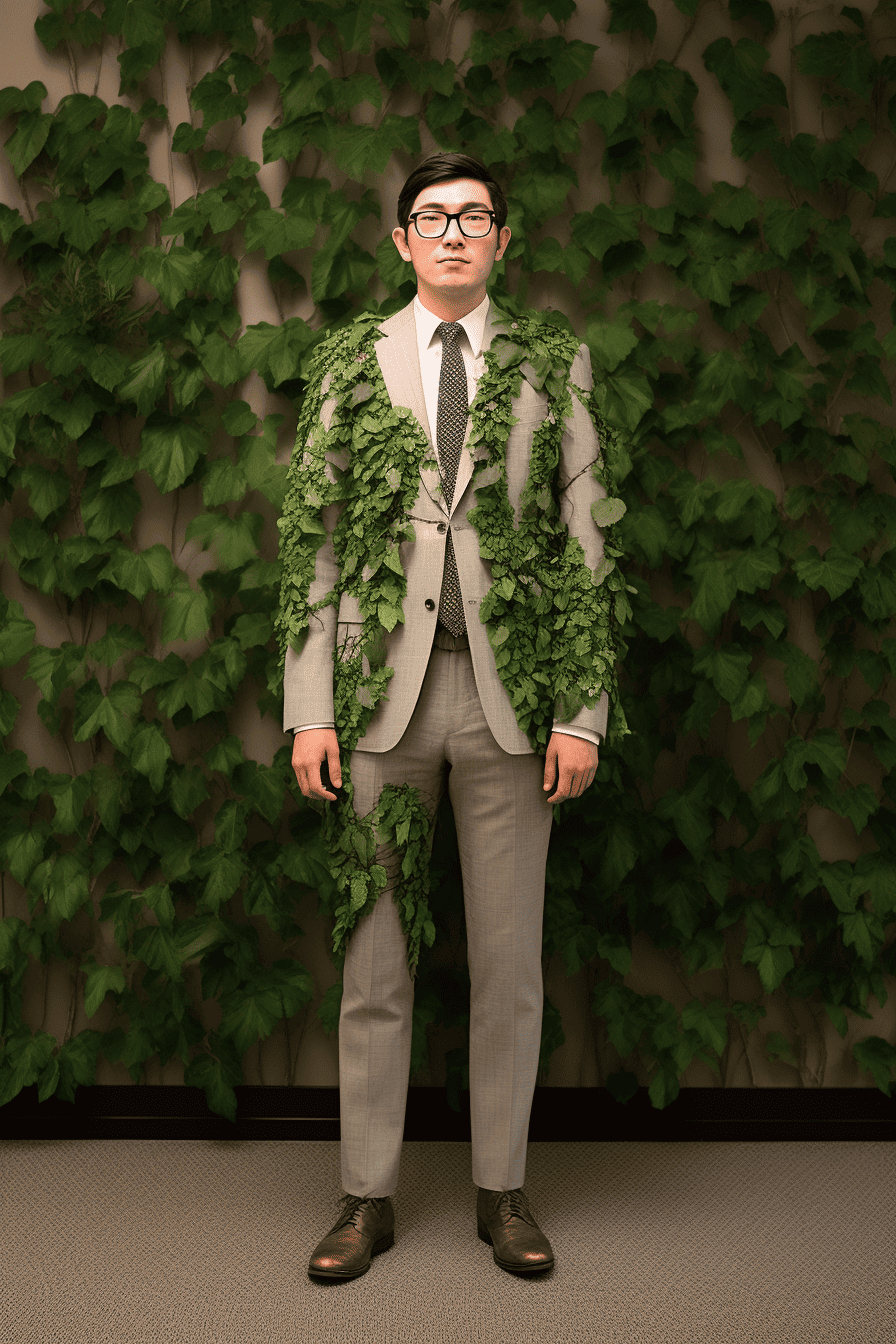
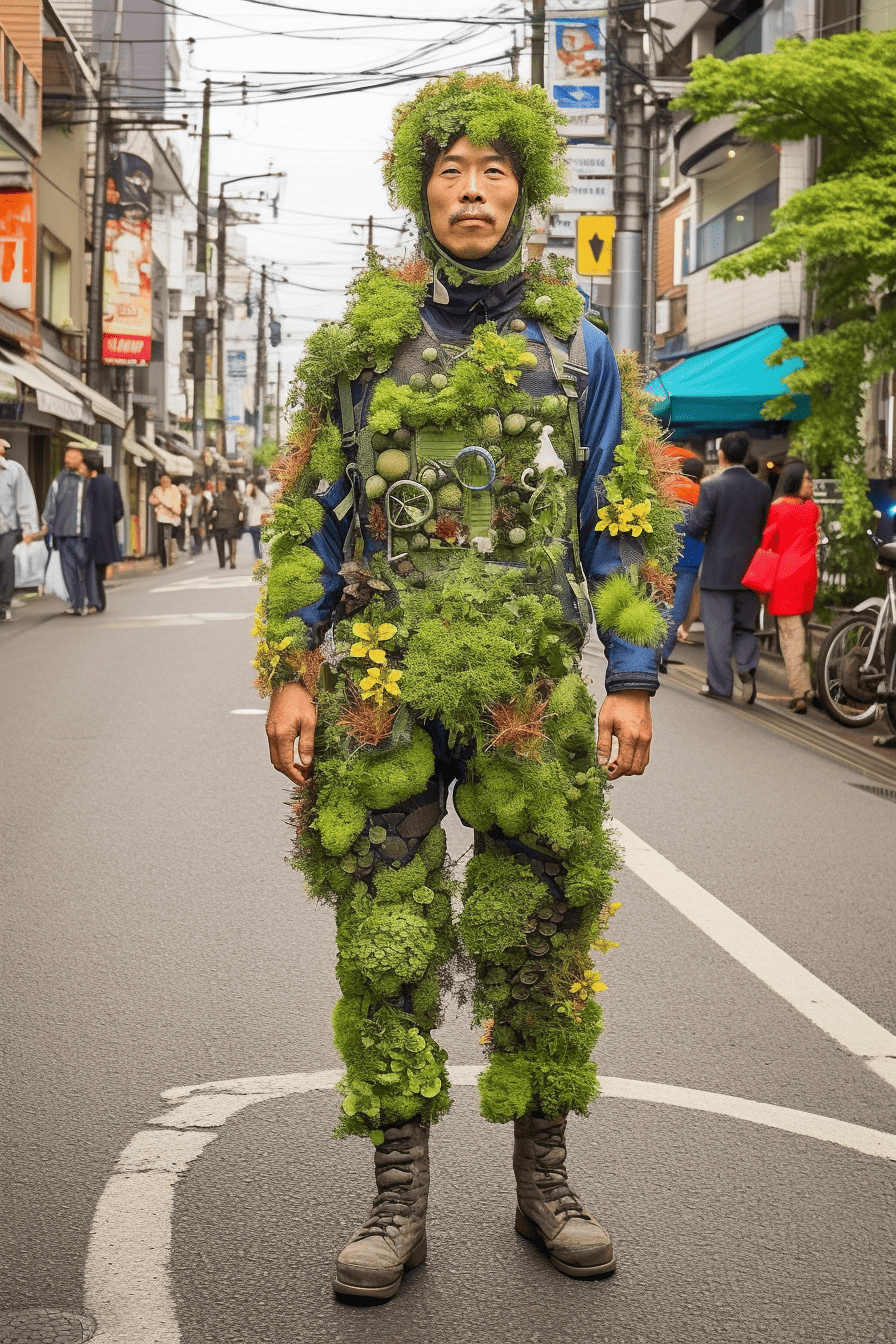
“If only half of the people of Tokyo wore houseplants daily, think about what a beautiful city it would become,” Yasai reflects. “The daily commute would even become beautiful, with flowing rivers of plants moving through the city streets and on the public transportation system. What an incredible sight that would be from above.”
Sacrifices In Choosing A Fashion Lifestyle
Still, the pair admits that their fashion choices have created difficult lifestyle changes. Butsu laments having to shower with her clothes on and being shunned from the public onsen baths. And, of course, there are the strange glances she receives when riding the subway or ordering coffee from her favorite local shop. But the two have made many new friends and have encouraged one another to try daring new houseplant fashion designs, so it is no longer odd to run into a member of the Houseplant Fashion Movement walking around trendy neighborhoods like Daikanyama or Shimo-kitazawa.
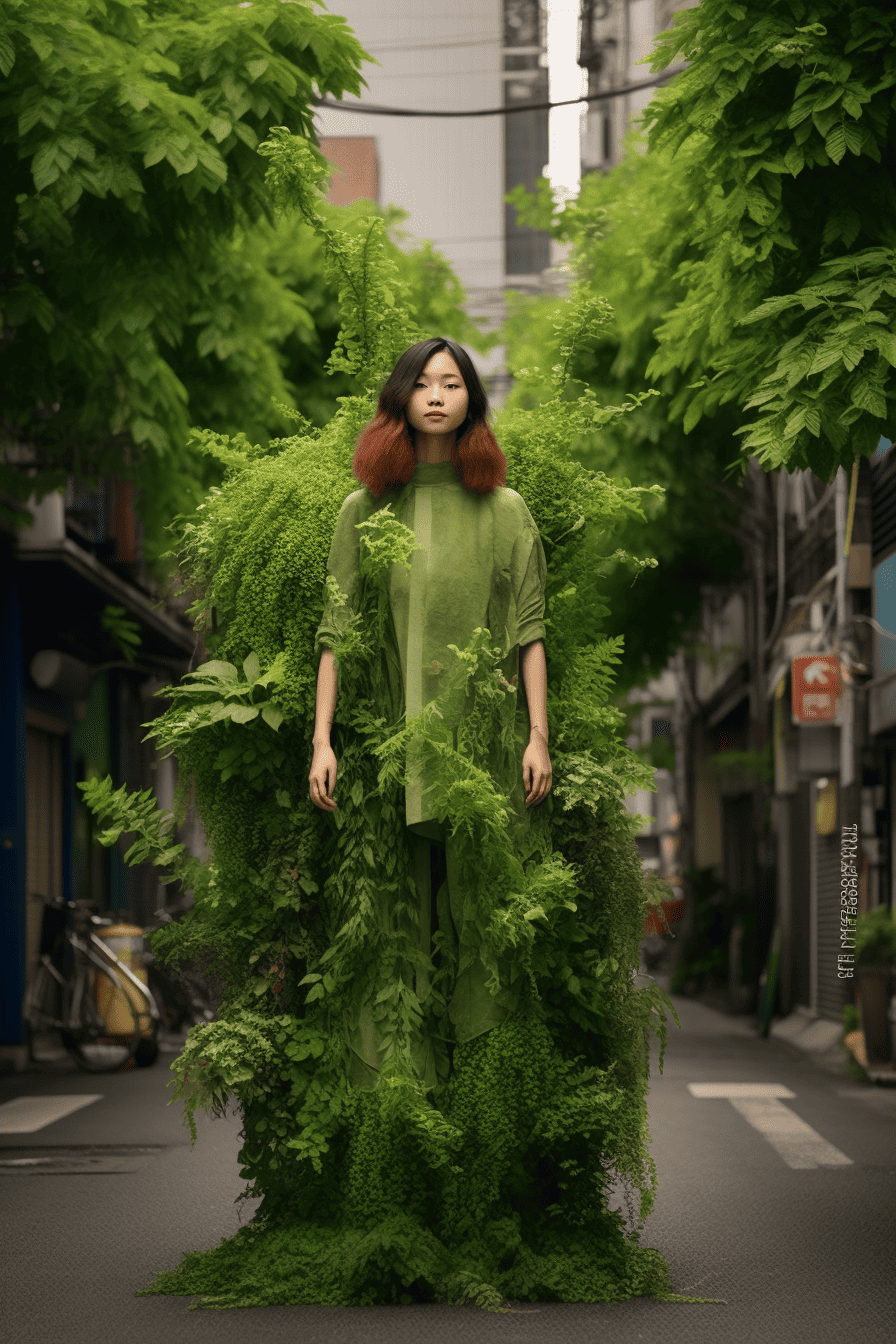
“The movement is definitely growing, especially among young women,” declares Yasai. “We’re tired of wearing the drab colors and conservative designs of typical Japanese fashion. We want our freedom, and we found it in houseplants.”
The Houseplant Fashion Movement has been in discussions with major fashion design houses in Japan and abroad to bring innovative, easy-to-wear designs to the masses. Soon, they hope their first brick-and-mortar shop will open on the grounds of the lush Shinjuku Gyoen National garden, no less.
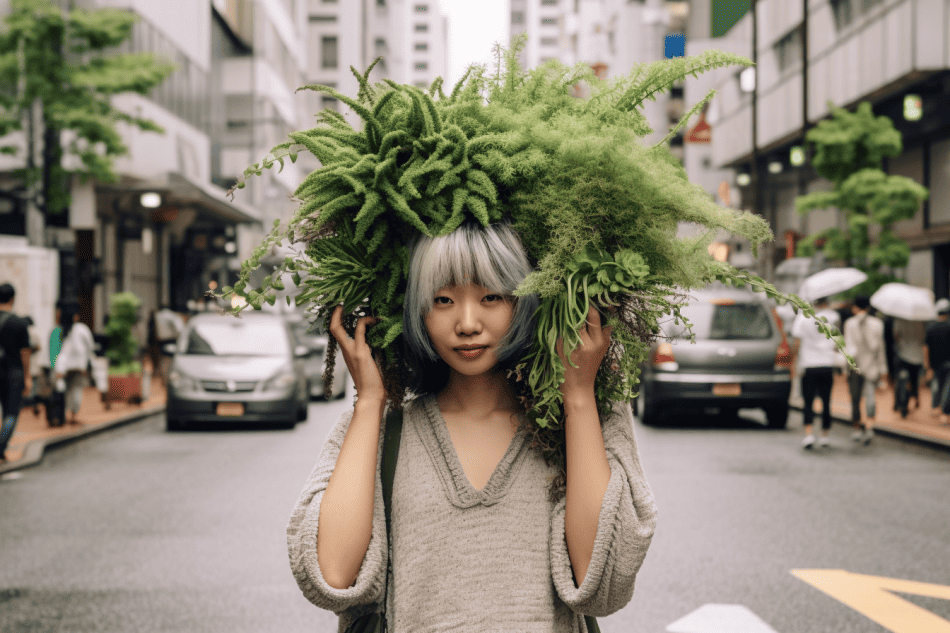
But the heart of the movement has always been around the design of the clothing, something Butsu doesn’t take lightly. “When I was younger, I wanted to design gardens but ended up designing clothes. Am I a fashion designer or a gardener? Is it fine to be both?”
Judging by the enthusiastic response to the Houseplant Fashion Movement among Japan’s fickle fashion trendsetters, the answer is enthusiastically yes.
About My “Illusions of Japan” Series
Can we be honest here? The story you just read is from my “Illusions of Japan” series, works that are part truth, part fiction, about people, places, and events in Japan. The images were created by me using the AI image generator, Midjourney. My intention is not to deceive but to entertain and at best, to get you to think about our world in a critical way and question for yourself what you can and cannot believe. As AI becomes a bigger part of our lives, it’s going to be increasingly challenging to separate the truth from fiction. At least here, there’s no harm in believing everything you read.